
 EN
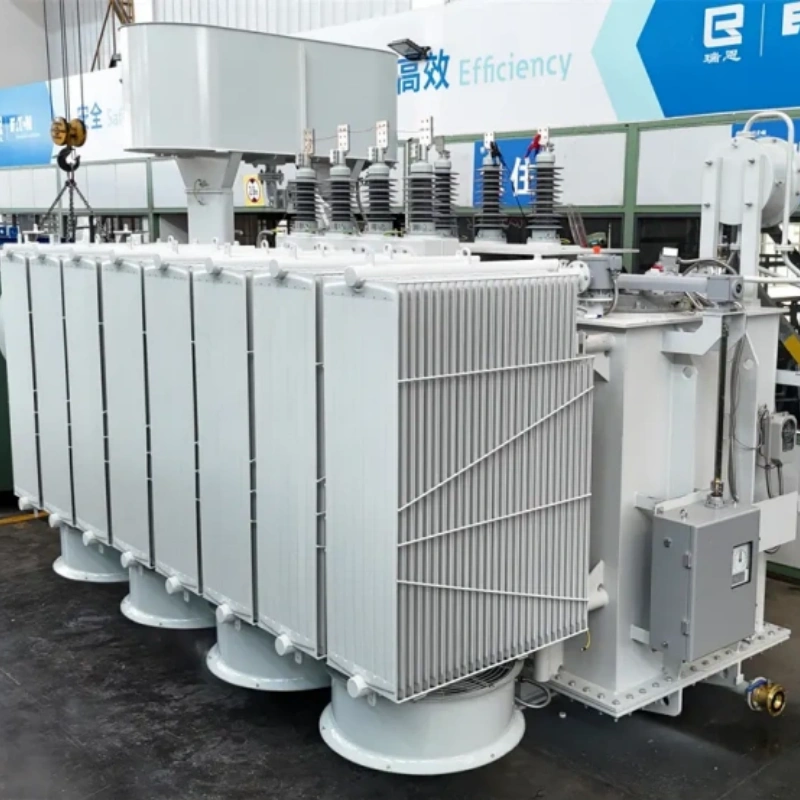
Solar-storage projects - and the markets where they are taking off from the Americas to Southeast Asia, the Middle East, Africa and even Europe - face a decision: Dry-type vs. oil-immersed padmounted transformers. The right choice affects your project's capital budgets as well as its long-term profitability. The first answer helps determine your project's TCO (total cost of ownership), schedule and safety, as well as your insurance premium. But your decision also impacts site safety and insurance costs. Jiangsu Ryan Electric Co., Ltd., a JV with Eaton (USA), makes both styles in units up to 10 MVA and 132 kV. In this article, I compare the characteristics of dry and oil-immersed transformers, and advise you on which to choose for your next solar-storage project.
Understanding the Two Technologies
Dry-type pad-mounted transformers generally use solid or cast resin insulation rather than liquid, with air or solid dielectric. They eliminate oil containment requirements, reduce fire propagation risk and spill potential, all significant advantages for urban solar carports, rooftop storage, and environmentally sensitive sites.
Oil Immersed pad mounted transformers are insulated and cooled by mineral oil. Their efficiency is normally greater at higher ratings, they have increased overload capacity, and they cost less per MVA initially than other types, making them a good choice for larger utility-scale solar installations and in remote storage yards where space and cost are key considerations.
Ryan Electric manufactures both single phase and three phase pad-mounted transformers, and compact substations that are configured with either single phase or three phase transformers.
TCO: Where the Real Costs Hide
Upfront price is lowest for oil-immersed units, and will typically be 10-20% lower at similar ratings. However, the story of TCO is even more comprehensive:
Dry-type transformers eliminate oil testing, oil containment, and fire suppression equipment. Lower lifetime service costs are important at unmanned storage sites when there is no fluid maintenance.
Oil-immersed units tend to operate at higher efficiency and have a longer insulation life when the loads are high and cyclic - an ideal match for charge and discharge cycles of battery storage. They do, however, need oil analysis on a regular basis and ultimately oil changes.
Solar storage: load profiles are very cyclic. The R&D team at Ryan Electric actually creates custom transformers up to 10 MVA to minimize no-load and load losses with your dispatch plan, optimizing TCO, not just purchase price.
Lead Time: Planning Around Production and Testing
Lead time often makes or breaks interconnection deadline. Oil-immersed units can require even longer lead times due to tank fabrication and oil processing, while dry-type units can enjoy simplified assembly, but both are dependent on shop testability.
Ryan Electric has automated production lines and two test labs (one CNAS accredited) that operate at 35 kV and 110 kV. We conduct regular, type and special tests in our three dedicated test bays covering cast resin dry type, liquid immersed power and substation products. This eliminates re-testing delays, with every unit certified to IEEE, UL, CE, ASTA and DEKRA standards. Early interaction with our engineering team enables us to get your order into production and testing to match your construction schedule.
Insurance and Risk: The Hidden Differentiator
Insurers charge different premiums on the two technologies:
Dry-type transformers eliminate the use of flammable liquids, which significantly decreases the risk of fire in populated installations or indoor locations and can help to lower premiums. They also do not cause any environmental liability due to oil leaks.
Oil immersed transformers can need fire barriers and containment, and some insurance companies charge above-and-beyond premiums for those that are located close to water or heavy brush.
Dry-type pad-mounts can provide quantifiable insurance savings over the life of the asset (25 years or more) in solar storage applications, which are often located in close proximity to communities or on brownfield sites. However, oil-immersed units can still be insured and economically viable if the necessary containment measures are planned from the outset of the project. Ryan Electric can provide documentation to support your insurer's review with both configurations.
Making the Right Choice with Ryan Electric
There is no single correct answer, just the one that is the right answer for your site, grid code and financing scheme. Ryan Electric has served clients like Microsoft, State Grid, and has exported to more than 80 countries, with a proven history of delivering reliable, efficient, fully customized transformer solutions for renewable energy, energy storage, utilities, and large-scale infrastructure. We offer more than 20 product series, such as VPI transformers, cast resin transformers, distribution and power transformers, unit substation transformers, single and three phase pad-mounted transformers, all of which meet IEEE, UL, CE, ASTA and DEKRA standards.
Ready to Specify Your Pad-Mount Transformer?
Don't be caught off guard by choosing the wrong transformer for your solar storage venture. Contact our technical experts today to get a side by side TCO analysis for your site or request a customized solution and quotation based on your voltage, rating and delivery requirements for dry-type vs oil-immersed pad-mounted transformers. Ryan Electric's engineering team will support you to secure performance, compliance and cost before your next milestone. Contact us today to get started.