
 EN
EN
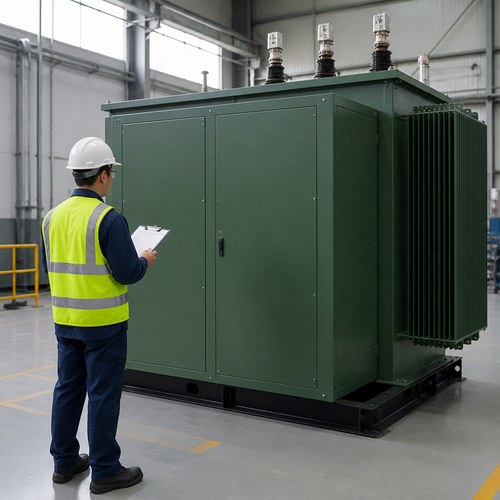
How to Evaluate a Transformer Manufacturer: 5 Quality Indicators That Separate Real Factories from Traders
A buyer in Texas sent us a quote request last year with a suspicious attachment — a certificate PDF with a faded UL logo and a factory address that turned out to be a shared office block. When we offered to run a quick UL Product iQ check together, the supplier stopped replying. That story repeats across the industry: transformer buyers are quoted low prices every week, but few know how to tell a real pad mounted transformer manufacturer from a trading company with a brochure. This guide gives you five verifiable indicators — what to ask, what to look at, and how to confirm each claim yourself.
Why the Factory Behind the Quote Matters
Transformers are 20- to 30-year assets. A distribution unit installed on a utility pad today will outlive the engineers who specified it, which means the manufacturer’s quality control system matters more than the unit’s sticker price. The difference between a factory and a trader shows up in test reports, material certificates, and the willingness to open the production floor for inspection.
Here is the part most buyers miss: a transformer factory audit is not about finding problems — it is about confirming that the factory has a repeatable process. One perfect unit can be luck. Fifty identical units with consistent test values are a process, and that process is what you are really buying.
Indicator #1 — Certifications You Can Actually Verify
Wall-mounted certificate frames prove nothing. What matters is whether the certification number is active and matches the product line you are buying. For North American projects, ask for the UL file number and the CSA file number, then verify both yourself.
The verification takes five minutes. Open the UL Product iQ database, enter the file number, and check three things: the product category, the company name, and the current status (active vs. terminated). We have seen buyers accept expired listings because the certificate looked official — a terminated UL file is a red flag that no amount of sales talk can fix. For pad-mounted equipment, also confirm the enclosure standard referenced on the file: IEEE C57.12.28 covers the coating and integrity requirements for above-grade pad-mounted enclosures.
Indicator #2 — Test Reports and the Testing Floor
A genuine factory tests every unit before shipment. The routine test sequence for distribution transformers includes no-load loss, load loss and impedance, induced overvoltage, and applied voltage withstand tests. Ask for the actual test report from the last batch — not a sample, the real one for a unit you are buying — and check that the measured losses sit within the guaranteed values.
The deeper question is whether the factory can run these tests on its own floor. During a transformer factory audit, walk the test bay and look for the equipment: a loss measurement system, an impulse generator for lightning impulse tests, and a calibrated temperature rise setup. A factory that outsources all testing to a third party is not necessarily disqualified, but you should ask who witnesses the tests and whether witnessed testing is included in the price. Some UL listed transformer suppliers offer third-party witnessed testing as a standard option — that is a meaningful transformer quality control signal.
Indicator #3 — Production Process Depth
The transformer’s core and windings are sealed inside the tank, so you cannot see quality after delivery. You can only see it during production. Ask the factory for process videos or arrange a live video call to the workshop — this is where real factories differ from traders.
Three process details tell you the most. First, the vacuum drying step: windings must be dried under vacuum before impregnation, and the factory should state the vacuum level and holding time. Second, for dry-type units, whether they use VPI (vacuum pressure impregnation) and at what resin content. Third, the welding quality of the tank — ask for the weld inspection records. These are not secrets; any serious factory will show you. If a supplier offers only marketing renderings and refuses a workshop video, treat that as a
transformer factory audit failure.
Indicator #4 — Delivery History and Project Track Record
Past shipments are the most honest sales document. Ask which countries the factory has exported to in the last two years, and ask for shipping records — packing lists, bill of lading numbers, and port destinations. For North American buyers, confirm that the factory has shipped
pad mounted transformer units with the correct ANSI ratings and secondary voltages, not just units built to local standards.
Overseas delivery is where many first-time buyers get hurt. A transformer shipped without proper export packing can arrive with a corroded tank or damaged bushings. Ask about the packing specification: rust prevention, moisture barrier, and whether the unit is shipped with nitrogen-filled tank for oil-immersed types. The factory’s answer to "what happens if the unit arrives damaged" reveals more about their service attitude than any marketing claim.
Indicator #5 — Commercial Transparency
The quote itself is an evaluation tool. A complete quotation from a serious pad mounted transformer manufacturer includes: rated voltage and capacity, no-load and load loss values, impedance, sound level, weight, dimensions, packing details, delivery term, and payment term. If the quote only states "500 kVA, $X", you are negotiating with a trader who has not done the engineering.
Payment and delivery terms are equally revealing. Standard practice for custom transformer orders is a balanced schedule: a deposit, a progress payment tied to test completion, and a balance against shipping documents. If a supplier demands full payment before production starts, or promises a delivery date that defies physics — a custom 100 MVA unit in three weeks — walk away. Realistic lead times, clear milestones, and a written warranty clause are the marks of a factory that plans to see you again.
What Ryan Electric Does Differently
We put these five indicators to work in our own operation, and we invite buyers to check. Every unit we ship to North America carries UL listing and CSA certification, with the file numbers included in the quotation package so you can verify them in UL Product iQ yourself. Our production floor runs VPI and cast resin lines, routine tests are performed in-house on every unit, and third-party witnessed testing can be arranged at your request.
Since 2023, our production has operated under the same quality system review that our joint venture partner Eaton applies to its own facilities. And we do not ask you to trust our word: we offer a live factory tour by video call, where you can walk the test bay and the winding workshop in real time. That is the standard we believe every UL listed transformer supplier should meet.
A 30-Minute Evaluation Checklist
Use this checklist in your next supplier call:
- Ask for UL/CSA file numbers and verify them in UL Product iQ.
- Request the actual test report for the batch you are buying, not a sample.
- Schedule a live video walkthrough of the workshop and test bay.
- Ask for export shipping records from the last two years.
- Compare the quote’s technical parameters and payment schedule against this guide.
If a supplier passes all five, the price discussion becomes meaningful. If they fail two or more, the savings on the quote will likely turn into rework, customs delays, or an early failure — none of which appear on the invoice.
Get a free technical quote → with your load list and target country, and we will return a quotation with file numbers, test values, and a factory tour appointment.
Table of Contents
- How to Evaluate a Transformer Manufacturer: 5 Quality Indicators That Separate Real Factories from Traders
- Why the Factory Behind the Quote Matters
- Indicator #1 — Certifications You Can Actually Verify
- Indicator #2 — Test Reports and the Testing Floor
- Indicator #3 — Production Process Depth
- Indicator #4 — Delivery History and Project Track Record
- Indicator #5 — Commercial Transparency
- What Ryan Electric Does Differently
- A 30-Minute Evaluation Checklist