What is a dry type transformer used for?
Where you put your transformer dictates the technology you need. For an outdoor utility grid, mineral oil works perfectly and stays highly cost-effective. But put that same liquid-filled unit inside a data center basement or a hospital, and you face a major risk. Fire safety codes, insurance liabilities, and environmental containment laws quickly rule out oil. In those spaces, dry-type units are the only standard.
We build these machines at our 120,000㎡ factory in Jiangsu. From our perspective, dry-type transformers aren't just a green alternative. They are a specific engineering requirement for indoor substations where oil is a clear operational liability. If your project is a standard indoor facility, you are likely looking for a reliable dry type transformer manufacturer to handle the design details.
The baseline use case is simple: enclosed spaces. Because dry-type transformers utilize air or solid resin for insulation instead of flammable mineral oil, they pose zero fire risk. This makes them the default choice for an indoor substation transformer. By placing the transformer indoors near the actual load center, you bypass the need for massive outdoor concrete pads and expensive high-current low-voltage bus ducts. It saves space, and more importantly, it saves cable costs.
Data centers are tough environments. They run hot, constant, and with zero tolerance for power interruptions. If an oil-filled unit on the ground floor has an internal insulation failure, the risk to the servers above is massive. Data center engineers simply don't take that risk. They use cast resin dry-type transformers built to IEC 60076-11 standards. These units are self-extinguishing and don't produce toxic smoke. They sit right next to the server rooms, reducing transmission loss across the entire facility.
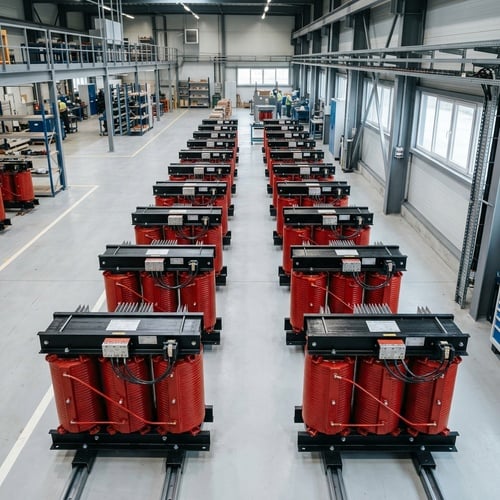 Cast Resin vs. Open Ventilated: Clear Differences under Real Conditions
When you look at the technical specs, you will see the cast resin transformer vs dry type open-ventilated (VPI) comparison. VPI coils rely on a thin coat of varnish. If you operate in a high-humidity zone or a dusty industrial site, that moisture and dust will settle on the air gaps. Over time, that leads to a tracking fault and a dead transformer. It is that simple.
Cast resin is built differently. The copper windings are completely encapsulated in solid epoxy resin under a high vacuum. Dust cannot touch them. Moisture cannot penetrate. It is a solid block of insulated metal. While the upfront price is higher, cast resin is the only reliable choice for harsh, humid, or high-dust industrial environments.
Modern projects require clear environmental compliance. Working with Eaton, we design our units with Class H insulation (180°C thermal limit) to meet strict efficiency rules. Oil transformers require regular fluid sampling, filtration, and eventual disposal of toxic oil. Dry-type units eliminate this entire process. At the end of the transformer's life, you recycle the copper and the steel core. No ecological risk, no soil contamination worries.
Let's clear up one myth: 'maintenance-free' does not exist. We manufacture these machines, and we know that you still need a dry type transformer maintenance checklist. Dust accumulates in the air ducts. If you don't blow it out with dry compressed air every six months, the coils will run hot. For every 10°C rise above the rated insulation limit, you cut the transformer's life in half. The checklist is straightforward: clean the ducts, verify bolt torques on the terminals, and run an infrared scan once a year to find hot spots.
Expect 25 to 30 years under normal load and clean air. The lifetime limit is the temperature of the insulation. Keep the ventilation fans working, keep the room dust-free, and it will run for decades.
Precision casting of epoxy resin under a vacuum requires expensive molds and heavy industrial machinery. With oil, the liquid handles the heat dissipation naturally. With dry-type, the physical engineering of the resin and the cooling ducts has to do all the work. You pay for that safety engineering upfront.
Need a project spec sheet instead of a sales pitch? Contact Ryan Electric's engineering team today for direct technical support.

 EN
EN