
 EN
EN
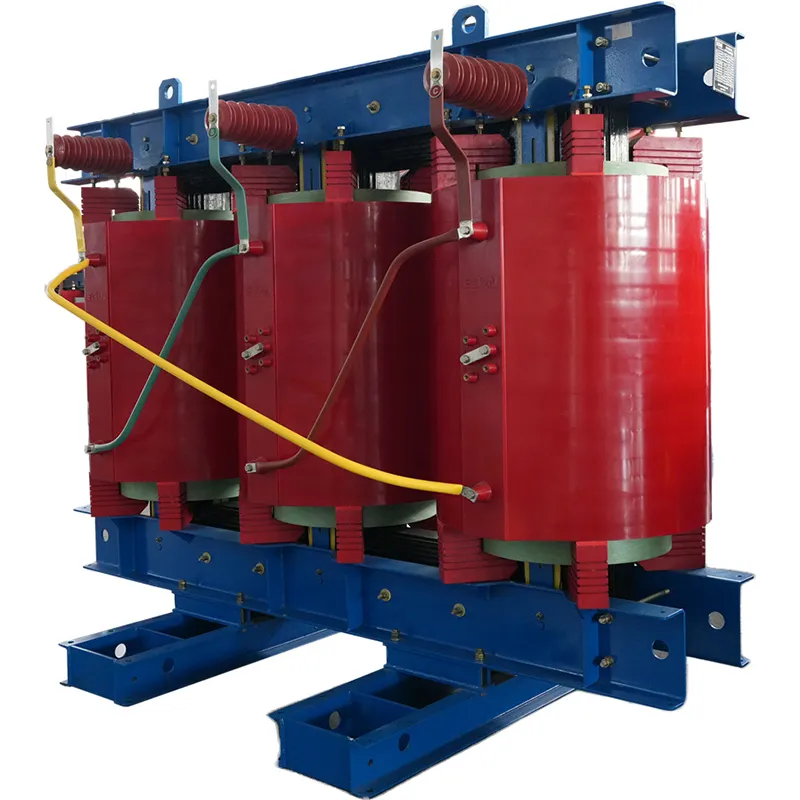
If your project requires dry-type transformer capable of performing under conditions of your site, it's not just matter of comparing nameplate ratings. Every technical parameter is of importance on mission critical infrastructure, such as data center, solar plant or an offshore platform. Failure to meet single specification can have ripple effects – lost efficiency, regulatory delays, or premature asset failure. Here is the four-point checklist designed for decision makers, who demand certainty. This is not the limit at Jiangsu Ryan Electric Co., Ltd, but guideline for all customizations we do.
Voltage, Power, and Impedance – Defining the Operating Envelope
Start with the non-negotiables: rated voltage (primary and secondary), system frequency, continuous power capacity. Typical designs for dry-type transformers are for ratings up to 10 MVA, and from 3.3 kV to 132 kV. Specify not only the normal load but also the worst case overload profile. Provide short circuit impedance percentage (typically 4-8%) which determines fault current limitation and voltage regulation. If your grid suffers voltage drift, define the tap range (e.g., ±2×2.5%) and specify whether off-load or on-load tap changers are required. Last but not least is stating system grounding method and insulation level (BIL) that you have matched with your surge arrester coordination. These are the inputs that our R&D team uses to simulate transient response prior to first coil being wound.
Thermal Management and Environmental Robustness
Dry-core transformers use natural or forced-air convection cooling, with ambient conditions dictating design rules. Enter highest and lowest ambient temperature, ambient altitude (which can affect cooling efficiency) and relative humidity. For coastal, chemically aggressive or dusty sites, give enclosure rating (IP23, IP54, and more) and any external coating requirements. Also we need the temperature rise on resistance that is allowed by the insulation, usually 100°C or 115°C for Class F or H insulation, and desired winding hot-spot margin. If site is renewable energy and has cyclic loading, define daily load curve to optimize copper-to-iron loss ratios – such as lower core losses for high load factor applications. Our VPI (Vacuum Pressure Impregnation) process guarantees no voids in insulation, which is important for situations where humidity or condensation would be an issue.
Physical Constraints and Installation Interfaces
Space, weight and connection geometry are some of less obvious factors that are not taken into account until transformer is delivered. Give maximum footprint, ceiling height and crane access clearance. Indicate type of bushing (porcelain, composite or cable-box) orientation of terminal (top, side or bottom), and phase sequence. Ground clearance and lifting lug dimensions and locations are needed for pad mounted or substation-integrated designs. State whether or not wheels, skid bases, or seismic anchoring (for high-zones) are required. We have dual 35 KV/110 KV test labs where we can heat run all units under full load conditions, as well as test units in terms of their dimensional tolerances, no surprises at site.
Certification, Testing, and Documentation Regime
You may have number of standards in your project's acceptance criteria. We design in line with IEEE C57.12.01, IEC 60076-11, CSA and GB standards. Our CNAS accredited laboratory conducts routine, type, and special tests, including no-load losses, load losses, sound level, partial discharge (≤5 pC typical), induced overvoltage withstand. In addition to factory routine, indicate whether you need witnessed testing, third-party testing (UL, ASTA, DEKRA or CE) or more comprehensive report (material certificates, dimensional reports, CT/PT wiring diagrams). We can also provide accelerated aging and harmonic-load tests for non-linear loads (VFDs or UPS). A complete test dossier, traceable from raw copper, raw core steel to final hi-pot pass is included with each unit shipped.
At Jiangsu Ryan Electric, we do not skip your checklist, we critically review it, so that all items are not left out. With more than 20 product series delivered to 80+ countries to date for our clients such as major utilities and hyperscale data centers, we know the difference between “good” specification and “site-proof” specification.
The next step is very important. Beware of leaving your dry-core transformer to generic suppliers. Your initial specifications are sent to our technical experts for gap analysis and preliminary loss/thermal simulation. Or, ask for complete, costed proposal that includes CAD outlining drawings and test-plan options available based on project schedule and budget.
Call our engineering sales team today for no-cost specification consultation or just e-mail us directly to set up virtual design consultation. Make your checklist into transformer that surpasses all of your operating requirements, from initial energization through decades of reliable service.