 EN
EN
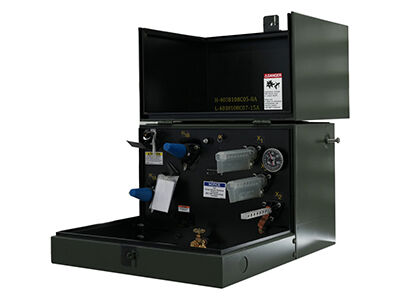
The upfront cost of an industrial 3-phase transformer is just a fraction of its true lifecycle cost. Electricity consumption and required maintenance, as well as unscheduled replacement, all add up to create a Total Cost of Ownership (TCO) that often dwarfs the initial price many times over. Our engineers at Jiangsu Ryan Electric design every 3-phase transformer to minimum TCO across all parameters: core and winding losses—which directly impact electrical bills-and insulation systems, which directly affect service life and replacement needs. This results in the ultimate industrial efficiency that continues to yield tangible financial benefits for years on end.
Core Design: Minimizing No-Load Losses 24/7/365
A 3-phase transformer can never really be switched off. Even when carrying no load, its core still draws magnetizing current, consuming electricity that never results in any work output. These no-load losses account for a significant amount of TCO over the life of a 3-phase transformer.
Jiangsu Ryan Electric solves the problem with cutting-edge core design. We employ high-permeability grain oriented silicon steel and-for highly efficient units-amorphous metal alloys. These materials can reduce core losses by as much as 70% compared to traditional electrical steels. For every joint on the 3-phase transformer's core, we utilize a step-lap mitred joint construction. This reduces the effective gap in the core, lowering magnetizing current (and resulting losses) while optimized the balance between core geometry and loss performance. Continuous operation facilities such as steel plants, data centers, and chemical plants will find that the electricity savings from low-loss cores quickly outweigh the upfront cost differential, driving TCO down quickly and persistently.
Winding Precision: Cutting Load Losses Under Full Operation
Whereas no-load losses dominate at light load, load losses are the driving factor of efficiency at full load. Load losses are mainly the result of IR heating in the windings and consume power at the full capacity of the 3-phase transformer, adding to electrical costs while additionally raising the cooling demand for the transformer itself.
Jiangsu Ryan Electric designs our 3-phase transformer windings with precision to cut load losses down significantly. For starters, we use high conductivity copper instead of aluminum to lower the resistance of our windings by about 40% for the same cross-sectional area. Other design considerations for reducing load losses include precisely winding every coil to minimize eddy losses (which scale with current) and using transposed conductors to further reduce the AC resistance by preventing eddy currents from forming on individual strands in each winding turn. Also, our Vacuum Pressure Impregnation (VPI) process is applied across our product line, which eliminates voids in our windings where partial discharge activity may increase the resistance.
Insulation Longevity: Deferring Capital Replacement
The capital replacement cost of an industrial 3-phase transformer that fails at 20 years often exceeds the cost saved by the energy efficiency it demonstrated throughout its life. One of the most potent levers available to reduce TCO is a well-designed, long-life insulation system.
Jiangsu Ryan Electric builds our 3-phase transformer product with top quality insulation that often extends the service life by up to 20 years compared to industry average. Mechanically durable, thermally upgraded Kraft paper-along with advanced dielectric insulation—maintains its strength even at temperatures that could cause conventional insulation to become brittle. Our VPI insulation process seals all micro-voids in the insulation that are the site of many initial partial discharge failures in a 3-phase transformer, and for liquid-immersed models, we use ester fluids to provide longer life by resisting the buildup of moisture and degradation. All of our units are thoroughly tested in our own CNAS-certified lab prior to shipment, ensuring insulation integrity of every unit to meet the long service life for the 3-phase transformer product that we engineer. With our smart transformer monitor, we are able to analyze real-time performance of these units remotely, taking the guesswork out of whether the insulation has deteriorated, thereby further extending service life and optimizing maintenance schedules.
Smart Monitoring: Predictive Maintenance Eliminates Surprises
Even the most robust 3-phase transformer will fail in time. However, by understanding how the transformer is operating, we can predict maintenance needs. Intelligent oversight turns maintenance into a predictive measure rather than a reactive one.
Jiangsu Ryan Electric offers smart monitoring solutions integrated into every 3-phase transformer we produce. We offer a host of integrated sensors such as fiber optic based temperature monitoring, Dissolved Gas Analysis on oil filled units, and partial discharge sensors on dry type units. This data stream feeds directly to our client's plant control system or a proprietary dashboard, where operators can closely monitor every facet of insulation health, thermal capacity, and headroom for increased load on the 3-phase transformer. If any problems are detected, such as increasing gas generation, hotspots, or rising partial discharge (PD), predictive algorithms will alert our clients days, or weeks, in advance. Planned downtime, rather than an emergency shutdown will then be required, cutting unnecessary TCO from every hour of downtime lost. Jiangsu Ryan Electric's 3-phase transformer solutions are trusted in 50+ countries around the globe, and manufactured according to standards such as IEEE, UL, and CE to provide industrial facilities with efficiency and longevity that simply cannot be matched in other alternatives.