
 EN
EN
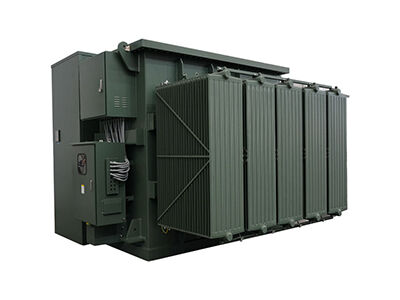
There's a premium on real estate,be it in a dense urban core where every square meter has an outsized cost or on a factory floor where the usable production area is the source of revenue. Conventional 3-phase transformer installations eat up precious real estate that could be making money for you or is needed for future expansion. Jiangsu Ryan Electric's compact 3-phase transformers offer full power ratings in radically reduced sizes,using proprietary advanced core materials,precise winding techniques,and optimized thermal management to achieve power densities that redefine site planning for both urban infrastructure and industrial facilities in over 80 countries worldwide.
Core Innovation: Higher Flux Density in Smaller Volumes
The physical size of any 3-phase transformer is largely dictated by the core—the magnetic circuit over which energy is transferred from winding to winding. Traditional core designs using standard grain-oriented steel need significant cross-sectional area to achieve their required flux density,and this size is directly related to the overall transformer footprint.
Jiangsu Ryan Electric's compact 3-phase transformer designs utilize state-of-the-art core materials to achieve higher flux densities in smaller volumes. Our amorphous metal cores offer superior magnetic characteristics at significantly lower cross-sectional requirements than conventional steel,while high-permeation grain-oriented steels are precision cut and stacked to maximize flux transfer and minimize core volume. Step-lap mitred joint construction eliminates air gaps,which would otherwise cause increased flux leakage and necessitate an even larger core size to compensate. The end result is a 3-phase transformer core with all the required magnetic performance,using up to 30% to 50% less space than a conventional steel core,and freeing up valuable real estate for other critical equipment,production areas or building tenants.
Winding Precision: Maximizing Conductor Utilization
The size of the transformer's core represents only one dimension in the equation. The windings-the loops of copper or aluminum that transmit the current-also represent significant space. Conventional winding techniques involve gaps between the conductors,and space between layers,none of which contribute to the electrical function but add volume to the transformer's profile.
Jiangsu Ryan Electric's precision winding techniques maximize conductor utilization for our 3-phase transformers. Computerized winding machinery ensures uniform turn spacing and accurate layer positioning throughout the entire coil assembly,eliminating the loose packing typically found on conventionally produced transformers. Our VPI (Vacuum Pressure Impregnation) process permits tightest possible clearances around the windings since the impregnating resin itself provides the necessary insulation,eliminating the need for additional air gaps required for adequate dielectric separation in conventional transformers. Transposed conductors further reduce space requirements for high-current 3-phase transformers by minimizing eddy current losses generated by circulating current paths. Together,these techniques contribute to a 3-phase transformer winding assembly that delivers full rated kVA capacity in the absolute minimum footprint possible.
Thermal Optimization: Smaller Enclosures Without Compromising Cooling
Compact 3-phase transformers require a significantly different approach to thermal management. While traditional designs accommodate ample space and bulky external radiators,these components are incompatible with the very concept of miniaturization.
Jiangsu Ryan Electric's thermal engineering optimizes every part of the 3-phase transformer cooling system for compact footprints. Optimized core and winding design reduce loss density,and therefore the amount of heat that needs to be extracted. Highly efficient cooling ducts are positioned precisely to maximize heat transfer from internal hot spots to the transformer's exterior. Our smaller-volume dry-type 3-phase transformers utilize highly efficient airflow patterns,while liquid-immersed units use more compact radiators and advanced forced cooling (ONAF) designs rather than large,sprawling fin banks. All 3-phase transformer thermal designs are tested and validated to exceed IEEE standards in our CNAS accredited laboratories, assuring operation well within nameplate limits even when confined to dense urban vaults or cramped indoor electrical rooms.
Site-Specific Customization for Maximum Space Utilization
Every installation site presents its own set of unique challenges. A high-rise office tower's constraints differ greatly from those of a manufacturing facility or a power generation plant.
Jiangsu Ryan Electric's R&D team customizes compact 3-phase transformer designs to precisely meet the space requirements of each individual site. Extremely low-height transformers are perfect for locations where overhead space is limited. Slim profile,narrow-width designs can easily pass through standard doorways and narrow hallways,while wall- or platform-mounted units eliminate floor space consumption altogether. Highly specialized pad-mounted designs can occupy minimal sidewalk or easement area in congested urban rights-of-way while providing all necessary utility clearances. Standard dry-type units can be incorporated into standard equipment lineups, eliminating the need for separate transformer rooms in industrial buildings. Combined with our global certifications to IEEE, UL,CE and other applicable standards,these tailored solutions ensure that every Jiangsu Ryan Electric compact 3-phase transformer provides optimal electrical performance in the absolute minimum footprint possible,as demonstrated in over 80 countries from data centers to industrial manufacturing plants.