
 EN
EN
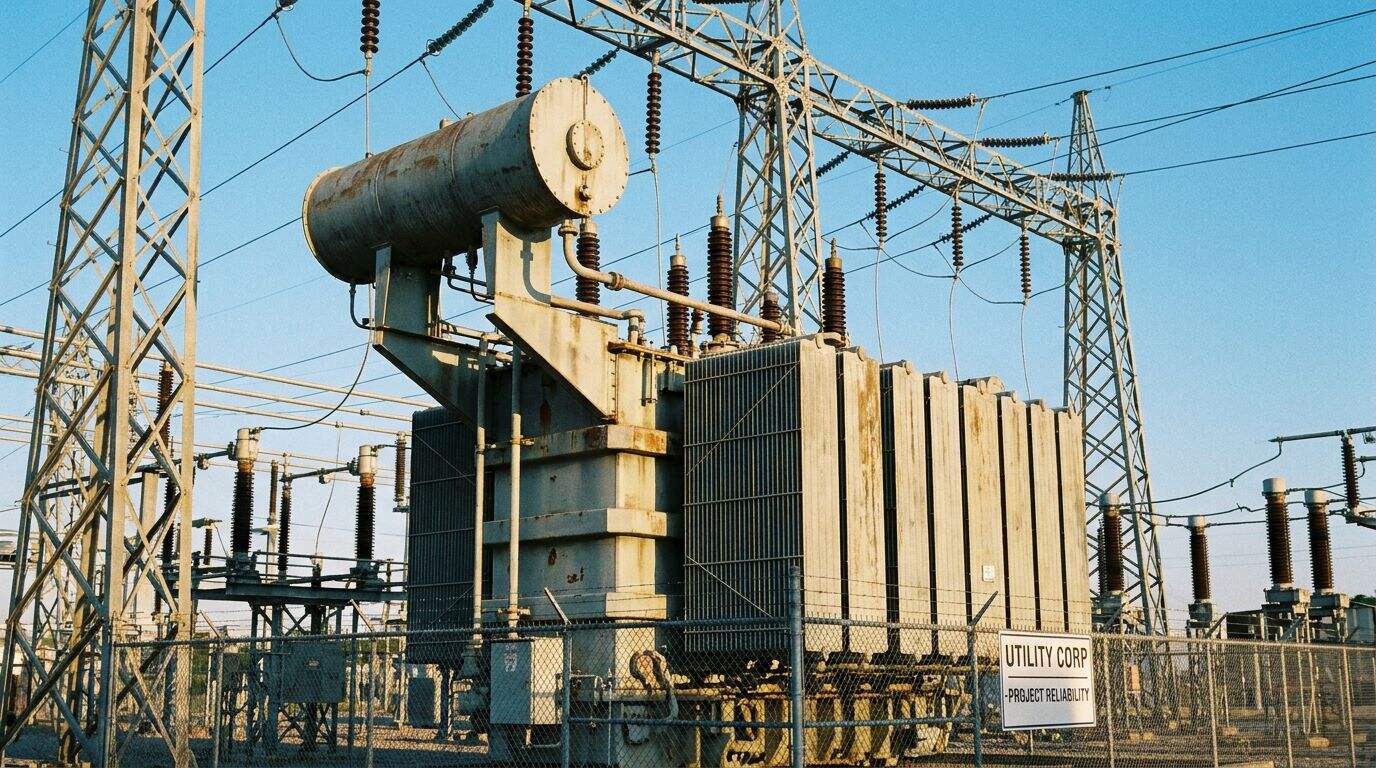
Oil-Immersed Transformers: Why They’re Still the First Choice for Many Power Projects
A few years ago, one of our customers from Southeast Asia told us something interesting during a factory visit. He said that whenever a new industrial park was built in his area, engineers would discuss many different transformer solutions, but in the end, most of the larger projects still went back to oil-immersed transformers.
His reason was straightforward: “They just survive harsh conditions better.”
That conversation stayed with me because it reflects how this industry actually works in practice. On paper, many transformer types can meet technical requirements. But once equipment is installed in places with dust, heat, unstable loads, or 24-hour operation, reliability becomes more important than theory.
And this is one reason oil-filled transformers are still everywhere.
They Are Not “Old Technology”
Some people outside the industry think oil-immersed transformers are outdated because dry-type transformers receive more attention online now, especially for indoor buildings and commercial projects.
But in utility substations, factories, mining sites, solar projects, and large infrastructure developments, oil-filled units are still extremely common.
The main reason is heat management.
Transformers generate heat continuously during operation. If that heat is not controlled properly, insulation ages faster, efficiency drops, and eventually failures appear. Oil works as both insulation and coolant at the same time, which makes the entire system very effective under heavy load conditions.
In hot regions like the Middle East, this becomes even more important. We have seen projects where daytime temperatures pushed equipment very hard during peak summer demand. Under those conditions, cooling performance is not just a specification on paper — it directly affects equipment lifespan.
Small Manufacturing Details Actually Matter
From the outside, most transformers look similar. A steel tank is a steel tank to many buyers.
But once production starts, the differences become obvious.
For example, core cutting quality affects no-load loss more than many people expect. If the silicon steel is processed poorly, energy loss increases and operating noise usually becomes more noticeable too.
The same goes for winding workmanship.
A transformer may pass initial testing, but poor winding alignment or inconsistent insulation handling can create problems years later after repeated thermal cycles.
This is one reason experienced buyers often ask detailed questions about manufacturing processes instead of only comparing prices.
Some customers visiting our workshop spend more time looking at drying equipment and testing areas than looking at finished transformers. Honestly, that approach makes sense.
Cooling Systems Sound Simple, But They Aren’t
People often see terms like ONAN or ONAF in technical documents and assume the difference is only about adding cooling fans.
In reality, it’s more complicated than that.
ONAN transformers rely on natural oil circulation and natural air cooling. They are simple and dependable, which is why they are widely used in distribution systems.
ONAF units add external fans to improve heat dissipation during higher loading conditions. This helps when projects experience load fluctuations or seasonal demand peaks.
Larger power transformers may use forced oil circulation systems with pumps and heat exchangers. At that scale, internal temperature control becomes much more sensitive.
One thing many non-technical buyers overlook is oil flow path design inside the transformer. If circulation is uneven, localized hot spots can form inside the winding structure. Those hot spots may not create immediate failures, but over time they gradually damage insulation.
Unfortunately, these issues are impossible to judge from product photos alone.
The Lowest Price Usually Comes with a Trade-Off
This part of the industry can sometimes be frustrating for buyers.
On the surface, two transformers may appear very similar. The specifications look close, the dimensions are close, and both suppliers promise compliance with international standards.
But after installation, the long-term performance can be completely different.
We’ve seen cases where customers purchased very low-cost units and later faced oil leakage, unstable temperature rise, or abnormal noise within only a few years of operation.
Usually, the problem is not one major mistake. It’s multiple small compromises together — thinner materials, lower-quality insulation, incomplete drying, weaker testing procedures, and inconsistent assembly control.
That’s why factory evaluation matters so much.
Personally, I think buyers should pay attention to three things before choosing a supplier:
-
Whether the factory can provide real type test reports
-
Whether testing is done in-house or outsourced
-
Whether engineers can clearly explain the production process
If communication feels vague during the quotation stage, after-sales support often becomes even harder later.
Why Long-Term Stability Matters More Than Initial Cost
In many industries, equipment replacement is inconvenient but manageable.
Transformers are different.
If a transformer fails inside a factory, substation, or industrial project, the downtime losses can become far more expensive than the equipment itself. That’s why many experienced EPC contractors focus heavily on operational stability instead of only trying to reduce purchase cost.
A well-manufactured oil-immersed transformer can operate for decades with proper maintenance.
And honestly, maintenance itself is usually not complicated.
Checking oil levels, monitoring silica gel condition, inspecting cooling systems, and performing periodic dissolved gas analysis can prevent many serious issues before they become failures.
Most transformer problems do not appear suddenly without warning. There are usually early signals if the equipment is monitored correctly.
Final Thoughts
Oil-immersed transformers are probably not the most “trendy” topic in the electrical industry today, but they remain one of the most trusted solutions for large-scale power applications.
After years of working with different overseas projects, I’ve noticed that customers eventually care less about marketing language and more about consistency.
Can the transformer run reliably during overload conditions?
Can the supplier maintain stable quality from batch to batch?
Will technical support still exist years later?
Those questions matter much more in real projects than polished brochures.
And in the end, that’s usually what separates a dependable manufacturer from a supplier that only competes on price.
Table of Contents
- Oil-Immersed Transformers: Why They’re Still the First Choice for Many Power Projects
- They Are Not “Old Technology”
- Small Manufacturing Details Actually Matter
- Cooling Systems Sound Simple, But They Aren’t
- The Lowest Price Usually Comes with a Trade-Off
- Why Long-Term Stability Matters More Than Initial Cost
- Final Thoughts