
 EN
EN
The Ultimate Guide to Dry Type Transformer Maintenance: Ensuring Decades of Reliable Power
In the world of electrical infrastructure, there is a common misconception that often leads to costly downtime: the belief that dry type transformers are "set and forget" assets. While it is true that they require significantly less upkeep than their oil-immersed counterparts—eliminating the need for oil sampling, filtering, and leak repairs—treating them as "zero maintenance" is a dangerous gamble.
At Ryan Electric, our service engineers often visit sites where a transformer has tripped due to simple dust accumulation or a loose connection—issues that could have been prevented with a basic inspection routine. Since becoming an official joint venture partner with Eaton in 2023, we have standardized our maintenance protocols to help our global clients achieve a dry type transformer life expectancy of 25 to 30 years or more. This guide breaks down exactly what you need to know to keep your power system running without interruption.
Understanding the Foundation: Cast Resin vs. VPI
Before diving into maintenance steps, it is essential to understand what is inside your enclosure. The maintenance requirements for a cast resin transformer differ slightly from those of a vacuum pressure impregnation (VPI) unit.
A cast resin transformer features coils that are completely encapsulated in epoxy resin under a vacuum. This creates a solid, moisture-proof barrier that is exceptionally resistant to harsh environments. From a maintenance perspective, these are easier to clean because the smooth surface of the resin does not "trap" contaminants as easily as exposed windings.
The Core Maintenance Checklist: A Three-Step Approach
Effective dry type transformer maintenance does not require complex machinery, but it does require consistency. We recommend a schedule based on the "Inspect, Clean, and Tighten" philosophy.
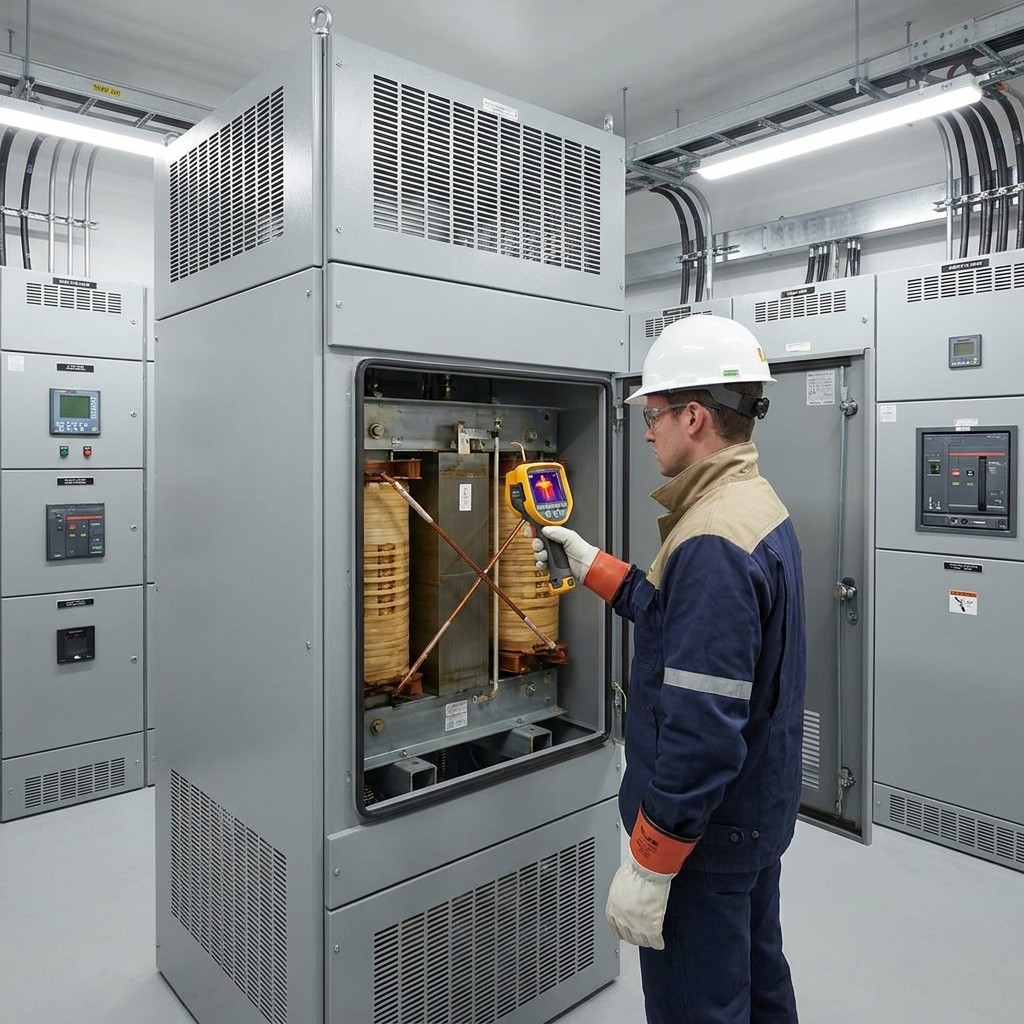
1. Visual Inspection and Thermal Monitoring
Every six months, a visual check should be performed while the unit is energized (following all safety clearances). Look for signs of discoloration on the insulation, which usually indicates localized overheating.
2. De-energized Cleaning Routine
At least once a year, the transformer must be de-energized and locked out. Dust is the silent killer of dry type units. It acts as an insulator, trapping heat inside the coils, and if it becomes moist, it becomes conductive.
3. Hardware and Connection Verification
Thermal cycling—the constant heating and cooling of the transformer—can cause bolted connections to vibrate loose over time. A loose connection creates high resistance, which leads to heat, which leads to fire.
Advanced Testing: Beyond the Visual
If you are managing a mission-critical facility like a data center or a hospital, a visual check isn't enough. You need data to back up your dry type transformer life expectancy projections.
How Ryan’s Engineering Prevents Maintenance Headaches
At Ryan Electric, we believe that the best maintenance is a high-quality build. Our dry type transformer factory utilizes a state-of-the-art vacuum casting chamber that ensures zero air bubbles in our resin. By eliminating them at the manufacturing stage, we significantly reduce the stress on the insulation over time.
The Environmental Factor: Where You Install Matters
We recently worked on a project in a coastal industrial zone where the air was thick with salt spray and humidity. The client was concerned about the dry type transformer life expectancy in such a corrosive atmosphere.
Conclusion: A Small Investment for Massive Security
Ultimately, dry type transformer maintenance is about risk management. Spending four hours once a year on a thorough inspection can prevent a week-long outage that costs thousands of dollars in lost production.
Table of Contents
- The Ultimate Guide to Dry Type Transformer Maintenance: Ensuring Decades of Reliable Power
- Understanding the Foundation: Cast Resin vs. VPI
- The Core Maintenance Checklist: A Three-Step Approach
- Advanced Testing: Beyond the Visual
- How Ryan’s Engineering Prevents Maintenance Headaches
- The Environmental Factor: Where You Install Matters
- Conclusion: A Small Investment for Massive Security