
 EN
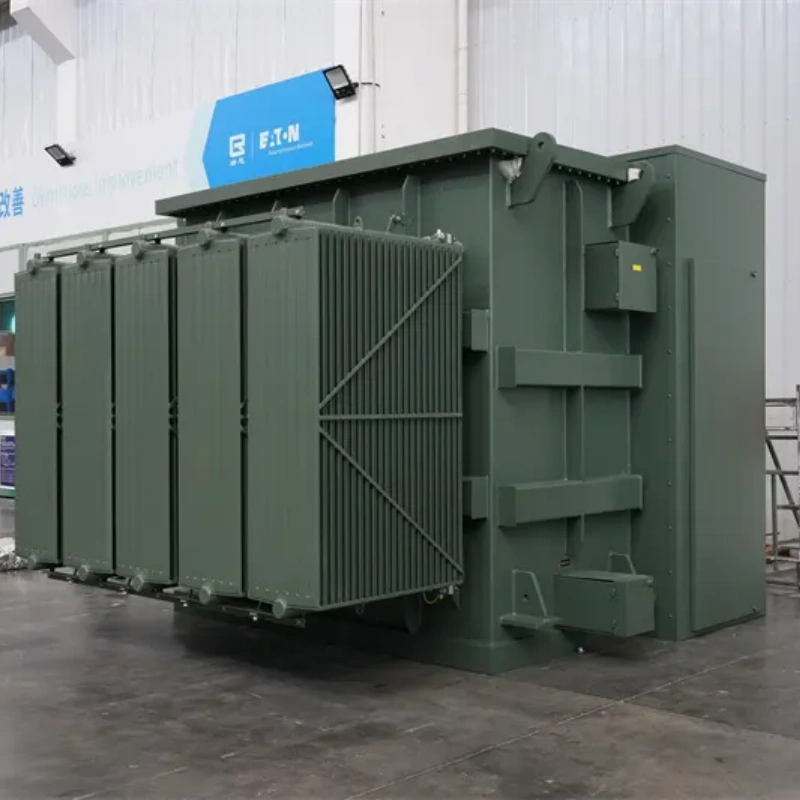
Choosing a dry-type power transformer can't always be done quickly from a catalog by an EPC contractor for any industrial application. The unit must mitigate loads with high harmonics due to variable frequency drives and loads in the data center, meet certification criteria for the intended market, and undergo the inspection of a compliance matrix by a consultant, all while ensuring the project meets loss and delivery goals. As a joint venture with Eaton (USA), Ryan Electric meets these needs with its portfolio of VPI transformers, cast resin transformers and unit substations up to 10 MVA and 132 kV, with dual 35 kV / 110 kV test laboratories, and CNAS accreditation. This guide is intended to help EPC procurement and engineering teams structure their technical requirements before issuing an RFQ.
Harmonic Rating: Matching the Transformer to the Load Profile
Harmonic currents from non-linear loads (NLLs) can reduce transformer capacity by increasing winding losses and eddy-current heating, and the transformer must be designed to accommodate this. Although the K-factor rating is a well-known practice in North America, a more relevant question for EPC projects is whether the transformer’s design, core flux density, winding construction, and neutral sizing have been coordinated with the harmonic profile specified by the drive or IT load manufacturer. The dry-type transformers used by Ryan Electric (VPI and cast resin types) are designed for use in indoor or safety-sensitive installations where data center UPS system or industrial drives create continuous harmonic distortion. For projects with significant non-linear loading, the RFQ should state the expected harmonic spectrum or K-factor so that the transformer’s thermal design and neutral bus configuration can be confirmed at the proposal stage.
Certificates That Matter for EPC Compliance
A compliance matrix for an industrial EPC project should include a comparison of the transformer's performance with IEEE, IEC, UL, CSA or local utility standards. Ryan Electric's test capacity, including three bays for each cast resin dry-type, liquid-immersed power and substation configurations, can handle routine, type and special tests, and can provide certificates for UL, ASTA, CSA, CE, DEKRA, and CNAS. This is important if the project specification requires witnessed factory acceptance testing or type-test evidence for short circuit withstand. The company's units that are listed on the UL and IEEE standards have been installed in Microsoft data centers, utility transmission networks, renewable energy projects in over 80 countries and can serve as a benchmark for EPC reviewers to assess in their sectors. During preparations of the RFQ, clearly define what certificate is required with the scope of the certification, not just “UL listed”, but the standard and file number, so that the correct documentation package is included in the proposal.
RFQ Essentials: What to Provide and What to Request
To avoid changes to the design at a later stage, the following minimum technical data must be included in a dry-type transformer RFQ for industrial EPC: Rated power and continuous load profile; primary and secondary voltage, frequency, vector group, and tap range; installation environment (ambient temperature, altitude, indoor/outdoor, IP rating); impedance and short-circuit withstand requirements; loss guarantees (no-load losses, load losses) with the evaluation method; partial discharge, seismic, and fire-safety requirements. Customization doesn't need to be limited to the standard RFQ frames and units with up to 10 MVA can be customized when the project requires it, without being forced into a standard catalog size. On the other hand, ask for technical data sheet, compliance matrix, general arrangement drawing, routine test plan and type-test references as necessary. If the proposed design will be based on IEEE standards for North American markets, verify that IEEE C57.12.01 and UL 1562 will apply (where applicable); for IEC-based projects, the relevant document will be IEC 60076-11 for dry-type units.
Why the Manufacturing and Test Backing Matters
A transformer proposal is not credible unless it comes from a factory. Ryan Electric's automated production lines and dual 35 kV / 110 kV test labs mean that routine and special tests can be completed in the plant, rather than at the customer site, reducing the FAT cycle and keeping the EPC timetable in check. The CNAS accredited laboratory status is a third party recognition of test competence, which is increasingly required by consultants in the pre-qualification process. Ryan Electric has met requests to supply multiple transformer types—VPI transformers, cast-resin transformers, distribution transformers, power transformers, and unit substations—for single-site projects, exporting to more than 80 countries.
Take the Next Step: Engage Our Technical Team
The most efficient way to move from specification to a firm proposal is to share your project’s single-line diagram, load profile, and certification requirements with our engineering team. Ryan Electric’s technical specialists can review your harmonic assumptions, confirm the appropriate dry-type transformer configuration, and provide a customized quotation that includes the applicable certificate package and test plan. For EPC projects with compressed schedules, we can also provide guidance on test documentation that may be shared with consultants during the proposal phase. Request a custom solution and quote for your next industrial project by contacting us.