
 EN
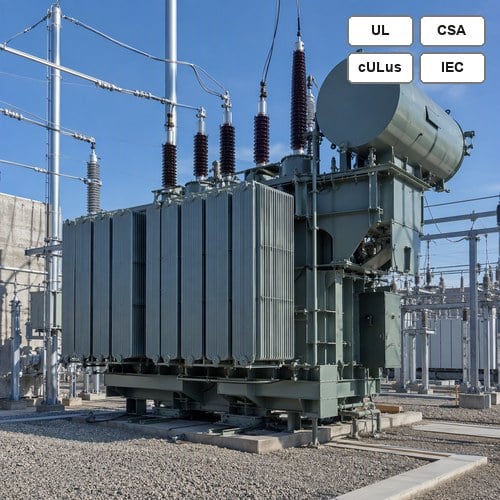
During the commissioning of a 2,000 kVA substation installed on the intermediate mezzanine floor of a regional medical center in Chicago, facility operators immediately raised an alarm. Even though the unit met nominal factory baseline tests, the continuous 120 Hz acoustic hum penetrated structural concrete beams, creating an unacceptable 58 dBA background resonance inside adjacent diagnostic imaging suites. The facility was forced to halt MRI calibration until acoustic remediation was executed. In noise-sensitive applications such as hospitals, urban residential high-rises, commercial office towers, and edge computing facilities, standard off-the-shelf sound ratings are simply inadequate. Controlling transformer sound level requires understanding the fundamental electromagnetic and mechanical mechanisms that generate acoustic energy, adhering to NEMA TR-1 limits, and specifying proven engineering controls during core and enclosure fabrication. As an experienced pad mounted transformer manufacturer and custom transformer builder, we engineer specialized low-noise solutions to resolve acoustic challenges before equipment ships to the site.
The Physics of Transformer Acoustic Noise: Magnetostriction and Lorentz Forces
Transformer acoustic noise originates from two distinct physical phenomena: core excitation noise and winding load noise. Core noise represents the predominant continuous hum heard whenever the transformer is energized, regardless of whether it is carrying electrical load. This core vibration is driven by core magnetostriction—the physical property of ferromagnetic silicon steel laminations to change their physical dimensions when subjected to an alternating magnetic flux. Because magnetostriction is non-polarized, the core laminations elongate and contract twice during each AC cycle, generating a fundamental acoustic frequency of 120 Hz on a 60 Hz electrical grid (or 100 Hz on a 50 Hz grid), accompanied by higher harmonic multiples at 240 Hz, 360 Hz, and 480 Hz.
In addition to core magnetostriction, magnetic forces acting across lamination joints and air gaps create interlaminar micro-movement. When the transformer operates under heavy electrical load, a secondary acoustic component emerges: load noise. Load noise is generated by electromagnetic Lorentz forces acting directly on the primary and secondary copper or aluminum conductors. These forces are proportional to the square of the load current (I2) and vibrate the windings against their clamping structures. When cooling fans or forced-oil pumps engage, auxiliary mechanical noise is superimposed onto the overall acoustic profile. Understanding these source mechanisms is essential when designing a high-performance custom three phase transformer tailored for quiet indoor environments.
NEMA TR-1 and IEEE Sound Level Standards: Baseline Decibel Thresholds
In North America, standard baseline sound levels for liquid-immersed and dry-type distribution and power transformers are codified in NEMA standards alongside general requirements in the IEEE C57.12.00-2021 distribution transformer standard. Standard NEMA TR-1 sound thresholds establish maximum permissible A-weighted sound pressure levels (Lp, measured in dBA at a standardized one-meter perimeter) based on equivalent kVA rating, BIL insulation class, and cooling mode (ONAN/OA vs. ONAF/FA). For example, a standard 500 kVA self-cooled liquid-immersed transformer has a NEMA TR-1 ceiling of 58 dBA, while a 2,500 kVA unit is rated up to 64 dBA.
While standard NEMA TR-1 limits prevent industrial hearing hazards under OSHA 1910.95 occupational noise exposure regulations, standard thresholds are frequently 6 to 12 dBA too loud for indoor installations, schools, hotels, and urban substations governed by municipal property-line noise ordinances (which often enforce night-time caps of 40 to 45 dBA). Specifying a low-noise transformer design requires contractually defining decibel reductions—such as 'NEMA TR-1 minus 6 dBA' or 'NEMA TR-1 minus 10 dBA'—measured strictly in accordance with IEEE C57.12.90 acoustic testing protocols across a multi-point microphone perimeter array.
Standard NEMA TR-1 vs. Low-Noise Transformer Sound Level Comparison (dBA)
The table below details typical baseline sound limits across common capacity ratings alongside engineered low-noise target thresholds:
| Transformer Rating (kVA) | Type & Cooling Mode | Standard NEMA TR-1 (dBA) | Ryan Low-Noise Target (dBA) |
|---|---|---|---|
| 500 kVA | Liquid-Immersed (ONAN) | 58 dBA | 48 - 50 dBA (-8 to -10 dBA) |
| 1,000 kVA | Liquid-Immersed (ONAN) | 60 dBA | 50 - 52 dBA (-8 to -10 dBA) |
| 1,500 kVA | Cast Resin Dry-Type (AN) | 64 dBA | 54 - 56 dBA (-8 to -10 dBA) |
| 2,000 kVA | Liquid-Immersed (ONAN) | 62 dBA | 52 - 54 dBA (-8 to -10 dBA) |
| 2,500 kVA | Dry Type for Data Center (AN) | 68 dBA | 56 - 58 dBA (-10 to -12 dBA) |
Core and Winding Engineering for Low-Noise Transformer Design
Achieving significant sound attenuation at the source requires deliberate electrical and mechanical modifications during transformer engineering. The most powerful design lever is operating flux density reduction. Magnetostriction non-linearly increases with core magnetic flux density (B). By reducing peak design flux density from standard commercial levels of 1.68–1.72 Tesla down to 1.45–1.52 Tesla, magnetostrictive strain is reduced by 40% to 60%, yielding an immediate 4 to 8 dBA drop in transformer sound level. Although lowering flux density requires a slightly larger core cross-sectional area and increased copper volume, it simultaneously slashes no-load core losses, enhancing lifetime operational efficiency.
In addition to flux density derating, core geometry and lamination joints play a decisive role. Utilizing high-grade, laser-scribed Cold-Rolled Grain-Oriented (CRGO) electrical steel or domain-refined silicon steel minimizes internal hysteresis and magnetostriction coefficient. Precision automated step-lap fully mitered (45-degree) core joint stacking eliminates 90-degree corner flux congestion, ensuring smooth magnetic transition across lamination bridges. Furthermore, heavy-duty structural core clamps, epoxy bonding along core lamination edges, and constant-pressure winding compression springs prevent harmonic mechanical resonance under dynamic load fluctuations, making the unit ideal as a dry type transformer for data center or mission-critical commercial facility.
Structural Isolation, Enclosures, and Acoustic Site Mitigation
Even the quietest core-and-coil assembly can cause severe acoustic disruption if structural vibration transmits into surrounding building foundations or steel raceways. Solid-borne vibration propagates through concrete floors and re-radiates as airborne acoustic drone hundreds of feet away. To isolate mechanical energy, internal core-and-coil assemblies should be decoupled from the tank base using elastomeric or spring-loaded vibration isolators. In our factory builds, internal elastomeric isolation pads provide 95%+ vibration attenuation, preventing core oscillations from coupling into the external tank walls.
On the external installation level, flexible busbar links and braided ground straps must be installed between transformer terminals and rigid electrical switchgear to block mechanical vibration transmission through conduit. For outdoor installations near residential property lines, sound-absorbing acoustic barrier walls with mineral wool dampening or fully baffled acoustic weather enclosures can attenuate airborne transmission by an additional 10 to 15 dBA. Combining internal core derating, structural vibration isolation, and external acoustic baffling allows electrical engineers to achieve stringent indoor sound criteria without compromising thermal cooling performance.
Ryan Electric Manufacturing Capabilities: Low-Noise Custom Solutions
At Ryan Electric (瑞安电气), acoustic engineering is integrated into every stage of custom transformer fabrication. Operating from our 120,000 square meter ISO 9001/14001 certified manufacturing plant equipped with 180+ precision fabrication systems and holding 37 design patents, we specialize in high-reliability, low-noise transformers engineered for global markets. Since 2023, as an official joint venture manufacturing partner with Eaton, Ryan combines world-class quality governance with agile engineering customization.
Every low-noise unit engineered by Ryan—including liquid-immersed pad-mounted units, cast resin dry-type transformers, and substation power transformers up to 200 MVA—is manufactured in strict compliance with UL, CSA, IEEE, and IEC certification standards. Our comprehensive in-house testing facility features calibrated acoustic measurement bays where certified sound power and sound pressure tests are conducted under no-load, full-load, and forced-air cooling conditions. Whether you require a NEMA-minus-10 dBA unit for a hospital vault or a specialized low-vibration custom three phase transformer for an urban data center, our engineering team delivers verifiable acoustic performance.
Practical Specification Checklist for Noise-Sensitive Transformer Projects
When preparing electrical equipment specifications for sound-critical commercial, institutional, or urban utility projects, include the following clauses to ensure suppliers deliver verifiable acoustic performance:
- 1. Explicit Decibel Guarantees: Define maximum allowable sound pressure in dBA at 1 meter, specifying exact NEMA TR-1 reduction (e.g., 'maximum 50 dBA at 100% rated voltage under ONAN cooling').
- 2. Core Flux Density Limits: Specify peak operating core flux density not to exceed 1.50 Tesla to restrict fundamental magnetostrictive strain.
- 3. Step-Lap Mitered Stacking: Mandate laser-treated CRGO silicon steel with precision automated 45-degree step-lap joints and epoxy edge bonding.
- 4. Dual-Stage Vibration Isolation: Require factory-installed elastomeric isolation pads between core-and-coil and tank base, plus external neoprene isolation pads for concrete pad mounting.
- 5. Certified Factory Acoustic Testing: Require witnessed or certified IEEE C57.12.90 sound level test reports included in final submittal documentation prior to dispatch.
Partner with Ryan Electric for Sound-Critical Transformer Applications
Eliminate acoustic risk and ensure regulatory compliance on your next commercial, institutional, or utility project. Contact the Ryan Electric engineering team today to review your project single-line diagram, discuss sound attenuation requirements, and receive a comprehensive technical proposal tailored to your acoustic and electrical specifications.
About the Author: Engineering Applications Team at Ryan Electric (瑞安电气). Ryan Electric is a leading manufacturer of UL/CSA/IEEE certified distribution and power transformers, specializing in pad-mounted, dry-type, and liquid-immersed units for global commercial, industrial, and utility infrastructure.
Table of Contents
- The Physics of Transformer Acoustic Noise: Magnetostriction and Lorentz Forces
- NEMA TR-1 and IEEE Sound Level Standards: Baseline Decibel Thresholds
- Standard NEMA TR-1 vs. Low-Noise Transformer Sound Level Comparison (dBA)
- Core and Winding Engineering for Low-Noise Transformer Design
- Structural Isolation, Enclosures, and Acoustic Site Mitigation
- Ryan Electric Manufacturing Capabilities: Low-Noise Custom Solutions
- Practical Specification Checklist for Noise-Sensitive Transformer Projects
- Partner with Ryan Electric for Sound-Critical Transformer Applications