
 EN
EN
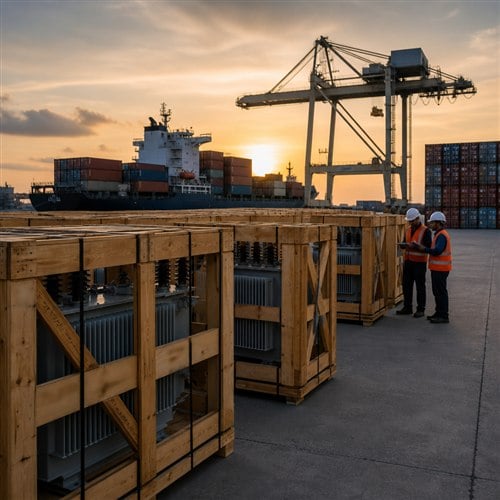
Transformer Lead Times in 2026: What’s Driving the Global Shortage and How to Plan Procurement
In 2023, a standard 1 MVA pad-mounted unit quoted at eight weeks. By mid-2026, buyers in the U.S. and Europe are hearing twelve to eighteen months for the same specification. Transformer lead time has become the first question in every procurement meeting — and it changes how smart buyers plan. Here is what is stretching the schedule, and how to protect your project.
What’s Stretching Transformer Lead Times in 2026
Three forces are pulling the same rope. First, AI-driven data center construction is absorbing record volumes of distribution transformers, and the queue keeps growing. Second, the U.S. Department of Energy’s efficiency program — under 10 CFR 431, with the 2026 rule tightening limits further — is pushing utilities and commercial owners to replace older units, while manufacturers shift production lines to the new efficiency tier. Third, upstream supply of grain-oriented silicon steel, copper, and insulating materials remains tight, and so does the pool of skilled winding and test personnel.
The result is a global distribution transformer shortage that no single factory can solve quickly. The DOE Distribution Transformers program page tracks the regulatory timeline, but the demand side — hyperscale data centers, grid modernization, and renewable interconnections — is what keeps order books full through 2027.
Which Product Lines Are Hit Hardest
|
Product Line |
Typical Lead Time 2023 |
Typical Lead Time 2026 |
|
Dry type, indoor (112.5 kVA – 3 MVA) |
8–12 weeks |
20–32 weeks |
|
Oil-immersed distribution (pad / pole) |
10–14 weeks |
40–60 weeks |
|
Power transformers (10 MVA and above) |
26–40 weeks |
80–120 weeks |
|
Custom designs or special certifications |
Add 4–8 weeks |
Add 8–16 weeks |
The tightest slots are large oil-immersed units and anything requiring North American certification, because certified capacity is concentrated among a handful of factories. Dry-type indoor units still move faster, but even those have doubled in the past three years. Plan your transformer procurement strategy around the product line, not the other way around.
How Buyers Are Adapting
The buyers who are still hitting their construction dates share three habits. They lock capacity early: orders placed six to twelve months ahead of need, with the supplier’s production slot reserved in writing. They standardize: every spec that can use a standard kVA, voltage, and enclosure gets one, because the engineering cycle is where weeks disappear. And they split deliveries: critical units first, spares and expansions later, so one long-lead item does not hold up the whole site.
A fourth habit is emerging: verifying real factory capacity instead of trusting a sales promise. A UL listed transformer supplier with its own winding and test lines can show you the production schedule; a trading company cannot. Asking for a factory visit, a video walkthrough, or a line-loading snapshot separates real slots from optimistic ones.
How to Lock In a Realistic Delivery Date
A realistic delivery date starts with a complete inquiry. Send the full specification — kVA, voltage, enclosure, certification target, and site timeline — because every clarification round adds a week. Then put the date in the contract: agreed production slot, agreed FAT (factory acceptance test) window, and liquidated damages if the supplier misses shipment. A factory that hesitates on a written date is telling you something.
Also plan the logistics leg. Ocean freight from Asia to North America or the Middle East runs four to six weeks on top of production, and port congestion is still unpredictable. Buyers who book freight in parallel with production, and who confirm the test report is issued before loading, remove the two most common end-of-project delays.
What Ryan Electric Does Differently
We run two production lanes on purpose: a standardized dry-type line that keeps healthy stock and short slots, and a project line for custom and certified builds. That split is why we can quote a production window at the inquiry stage instead of after design. Every order gets a written slot confirmation, and the FAT report is issued before crating — the same discipline our partners expect from Eaton’s joint-venture operations.
If your project timeline depends on transformer lead time, the cheapest insurance is asking early. Send your spec now and we will confirm the production slot, the certification path, and the freight plan in one reply. Request a delivery quote with your project timeline.