
 EN
EN
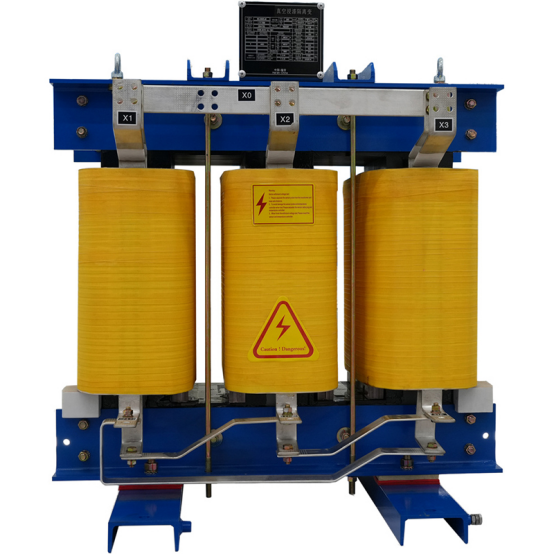
The modern world has evolved fast and nowadays, power distribution systems in and around buildings, industrial establishment and business facilities are becoming more complicated. Reliability, space efficiency and safety are important considerations in choices of electrical equipment in such environments. That is why dry transformers or dry type transformers are very popular in the range of indoor installations of various types of use.
In contrast to the conventional oil-based transformers, dry transformers employ either air or solid insulators as opposed to liquid dielectric oil. This inherent design contrast makes them particularly well adapted to the indoor setting with fire safety, environmental friendliness and operational stability being the most important considerations.
Improved Fire Safety in Indoor environment
The best performance of dry transformers is their excellent performance in fire safety, which is the reason why they are more desirable when it comes to indoor applications. Dry transformers can also be loaded with dry insulating oil instead of flammable insulating oil; this reduces the chances of fire, leakage or explosion considerably. This renders them suitable in areas where electric appliances are located near individuals, property and delicate resources.
Fire safety regulations are very stringent in properties like shopping malls, hospitals, schools, office towers and data centers. Dry transformers contribute to satisfying these safety considerations without the elaborate fire extinguishing system or oil reservoirs. This reduces directly the risk of installations and enhances the overall building safety to the facility managers and project developers.
Require certified safety reports? Get the documentation.
Hygienic and Green Process
Clean and environmentally friendly solutions are often demanded in installations that happen indoors. Transformers filled with oil have a danger of oil spillage, which may cause contamination of floors, walls and equipment around them. Conversely, dry transformers do not use liquid insulation and hence it is a cleaner and more eco-friendly alternative.
This design is particularly beneficial when it comes to the oil-free construction in the food processing facility, pharmaceutical manufacturing plant, or a medical facility because any contamination must be kept to the lowest level. Dry transformers facilitate the idea of a sustainable building by minimizing environmental impact and easing the process of adherence to environmental requirements.
Small Size and Spatial Economy
Indoor installations are often space-constrained, especially in the urban commercial buildings and industrial facility. The dry transformers are furnished to be in compact structure which makes it possible to be installed as flexibly as possible where it is required in a small area like electrical rooms, basements, and equipment floors. Their air-cooled or resin-encapsulated design does not require huge oil tanks or other cooling devices. This enables engineers to optimize layout planning and get transformers nearer to load centers and shorten the length of cables, voltage drops and system complexity.
Minimal Maintenance and operation
The low maintenance requirement of dry transformers is also another major benefit of dry transformers. Regular oil testing, filtration and replacement are unnecessary because there is no oil that needs to be insulated. This has a major impact on saving routine maintenance expenses and operational downtime is minimized.
In the case of indoor power systems that need constant running like data centers and manufacturing plants, dry transformers are a viable option and offer stable performance over the long term. They are also easy to inspect and monitor their condition because of their simple structure which enhances the overall system reliability.
Consistency in Performance in a changing environment
There are still difficult conditions found in the indoor environment such as high ambient temperature, dust, humidity, and vibration. Modern dry transformers are constructed with enhanced insulation materials and thermal management systems which guarantee the efficient operation of the same under such circumstances.
To ensure consistent performance, Ryan employs premium core materials and high-precision winding technology in its dry transformers, resulting in superior dielectric performance and stable voltage output. This leaves them applicable to a great variety of indoor applications, including commercial buildings as well as industrial control systems.
Adherence to International Standards
In the case of B2B projects, it should comply with global standards. Electrical installations inside the buildings have to be safe and effective to be inspected and approved. Common standards that are met with the use of dry transformer include IEC, IEEE, ANSI, CE, and UL.
Ryan Transformers produces dry transformers that meet the global technical standards, which means that they can be used to match various power systems in various regions, and facilitate the global engineering projects.
In favour of Modern Building and Industrial Systems
As the buildings are becoming smarter and more energy-efficient, there is a need to develop electrical infrastructure as well. Dry transformers facilitate the present-day power delivery systems because they provide safe, efficient and scalable solutions to indoor settings.
They are widely used in:
- Commercial complexes
- Industrial facilities
- Renewable energy systems
- Infrastructure transport.
They are necessary because of their flexibility and safety in the contemporary power networks in the indoor environment.
Conclusion
In indoor installations, dry transformers are more favored due to their ability to provide fire safety, environmental protection, space saving, low maintenance and robust work. The small size and their oil free design are also taken into account, making them suitable in buildings and facilities where cleanliness and safety are of the essence.