
 EN
EN
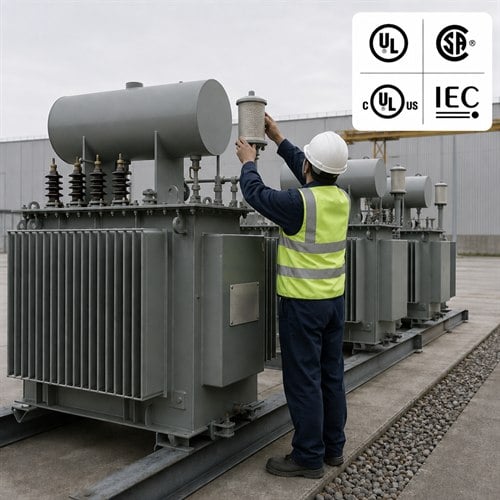
The Question That Arrives at 4 AM
The call arrives when a unit is already down. A 5 MVA transformer trips at 4 AM, the crew opens the tank and finds a failed winding or a burned diverter switch, and the first question on the bridge is always the same: how fast can we get a replacement? In 2026 the honest answer is measured in years, not weeks.
That gap is what a spare transformer strategy is for. Not a line in a risk register — a costed plan that names which unit you back up, where the replacement physically lives, how it is preserved while it waits, and who tests it before it carries load. Most plants we deal with already own a spare. Far fewer can put their hands on its test records, and that is the part that decides whether it is an asset or an expensive pallet.
Why a Spare Transformer Became Capacity Planning
Every spare transformer conversation now starts with transformer lead time. NEMA describes a wait of up to three years for a unit ordered today, against four to six weeks before the pandemic; Wood Mackenzie supply chain data puts larger power transformers at 80 to 120 weeks and transmission-scale units at three to six years. Utility Dive compiled those figures in a report that still reads like this morning's procurement meeting notes.
The demand behind the delay is not temporary. Between 2019 and 2025, generator step-up transformer demand rose 274% and substation transformer demand rose 116%, while prices for high-capacity units climbed roughly 80% over five years, per the analyst data summarised by pv magazine USA, where large units are now quoted out as far as four years. Some developers pay a premium to reserve a production slot before a site is even chosen.
Why a spare is hard to justify up front comes down to plain numbers. The U.S. Department of Energy TRAC programme notes that large power transformers are typically custom-made, pushing delivery past one year, and that their cost "prohibits extensive spare inventories." The U.S. Government Accountability Office added the freight side of the equation — units costing as much as $10 million to buy and hundreds of thousands of dollars to move — and found those costs stop some utilities from holding spares at all. For a single industrial site, the trade-off is simpler: one duplicate unit against the margin lost in a month of downtime.
Three Redundancy Options and Which One Fits
Which option belongs in your spare transformer strategy depends on how much capital you tie up against how fast the replacement has to arrive. The response times below assume the spare passes its verification checks and that transport is available.
| Strategy | What You Actually Buy | Response Time | Where It Fits |
|---|---|---|---|
| Dedicated duplicate | One unit identical in design to the critical transformer, owned and stored by you | Hours to days (transport plus verification tests) | Single critical load: data hall, process line, hospital, mine |
| Standardized shared unit | Two or three sites aligned on one design, with a single unit rotating between them | Days to weeks | Multi-site operators, industrial groups, utilities in mutual-aid networks |
| Component-level spares | Bushings, OLTC diverter switch, gaskets, fans, pumps, relays, oil | Weeks (repair window), not days | Very large or fully custom units where a duplicate cannot be justified |
A spare only counts if it can be energized in place of the failed unit. That means matching voltage ratio and tap range, vector group and phase sequence, and impedance closely enough that circulating current between parallel units stays acceptable — utility practice keeps the difference inside roughly ±7.5% and confirms it with a study rather than a guess. Physical fit matters too: tank footprint, bushing arrangement and cable box entry have to suit the pad or electrical room the spare will land in.
One compliance line catches buyers off guard: the listing belongs to the design, not the brand. A spare built to a different design than the installed unit can be energizable in one market and not in another — UL 1562 or CSA C22.2 No. 47 for dry-type designs, CSA C88 for liquid-filled units bound for Canada, IEC 60076 as the design basis where the project is specified that way. The certification file reference goes on our quotation, because the technician at the receiving dock will ask for it.
What Sitting in a Warehouse Does to a Spare Transformer
Stored equipment is not frozen equipment. A unit that passed every routine test in 2024 can be wet, gassy or mechanically stiff by the time it is needed in 2027, and its failure mode is then close to identical to the failure it was bought to replace. Good transformer storage is a discipline with a schedule attached, not a parking space.
For oil-immersed units, transformer storage starts with the tank: keep it sealed under a positive blanket of dry air or nitrogen, keep a desiccant breather in place, and set the radiator valves where the manufacturer's instructions require. Oil is sampled on a calendar, not on suspicion — dissolved gas analysis to the IEEE C57.104 method and oil quality to IEEE C57.106 limits, both compared against the factory values. Gaskets take a set, tap changer contacts oxidise, and a spare that has taken water through a loose diaphragm will not report the problem by itself.
Dry-type units need the opposite instinct: keep the space heaters energized, keep the enclosure closed and dry, and keep winding surfaces clean. Insulation resistance is measured at 500 V DC on low-voltage windings and at 2.5 kV to 5 kV on medium-voltage windings, and the readings are judged as a trend against the factory baseline rather than against one number in a table.
Before a stored spare is connected, we ask for the same measurements we would want on a new installation: turns ratio within 0.5% of nameplate at every tap, winding resistance balanced within 2% of the factory readings corrected to the same temperature, insulation resistance and polarization index checked against the original report, a full tap sweep with the motor drive confirmed, oil tests on liquid-filled units, protection and cooling circuits function-tested against the trip matrix, and — where a sweep frequency response fingerprint was taken at the factory — a field trace laid over it. Trend beats absolute value. A spare never re-tested after two years of storage fails in the same way as the unit it replaced.
If your spare has been sitting for more than 18 months with no test record after it went into storage, that is the moment to schedule a check — not the day the plant goes dark. Send us the nameplate photo and the original routine test report and our engineers will tell you which measurements to take first, and in which order. Technical reply within 48 hours.
Standardization Is the Cheapest Redundancy You Can Buy
The U.S. power system carries more than 80,000 transformer types, and one manufacturer estimate puts the spread at 200 or more distinct designs per 1,000 distribution transformers. That variety is why a spare rarely matches the failure that actually happens — which is why a standardized transformer design across a site or a fleet is worth more than a larger inventory.
Regulators reached the same conclusion. GAO reported in 2023 that DOE had identified standardization and equipment-sharing among utilities as the practical way forward, and by May 2026 DOE told GAO it had convened manufacturers and utilities to identify common equipment and specifications that make component replacement possible when an original part is unavailable. Reduce variation before you buy redundancy: two sites built on one 2,000 kVA design need a single spare to protect both.
In practice a standardized transformer design means fixing a short parameter list and writing it into the next purchase order whether or not that order is for a spare: voltage ratio and tap range, vector group, impedance band, temperature rise, cooling class, enclosure type and certification scope. The design library you end up with becomes the cheapest part of your spare transformer strategy.
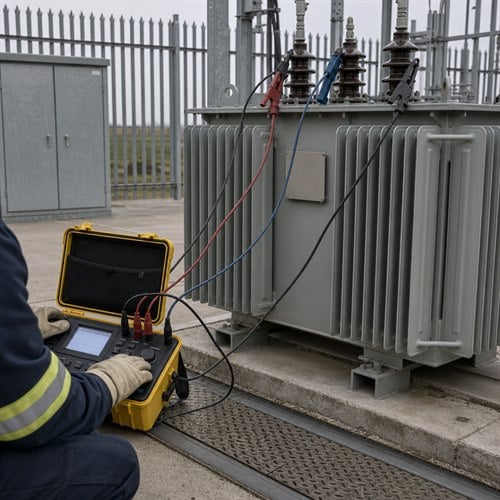
Building a Spare Strategy That Survives Storage
A spare is a promise about the future, and the paperwork matters as much as the iron. Every Ryan unit leaves with a routine test report, a nameplate record and, on request, a sweep frequency response fingerprint and winding resistance readings taken at a recorded oil temperature. When the same design is ordered later as a spare, we keep the original design file open instead of issuing a new model number, so a field team can compare like-for-like against the original trace.
Spare units ship with a preservation sheet: breather and desiccant schedule, blanketing scheme, radiator valve positions for storage, oil sampling interval and the port to sample from, and the monthly visual checks we ask the site to sign off. Certification is quoted with the unit, never after it — UL or cULus listing for designs bound for the United States, CSA certification for Canada, IEC 60076 where the project is specified in that language.
Ryan Electric has built dry-type, oil-immersed and pad mounted transformers since 2007 from a 120,000 m² plant with more than 180 sets of production and test equipment and 37 patents. Since 2023 we have been an Eaton joint-venture partner, which keeps our design reviews aligned with North American utility practice.
Five Questions That Decide Your Redundancy Plan
- What does one day of downtime cost at margin, against the capital cost of a duplicate unit?
- Which transformer carries the most load with the least switching flexibility around it?
- Can two sites share one design — and if not, what would it take to align them?
- Where will the spare live, and whose job is the monthly preservation check?
- How much transformer lead time can be removed by holding bushings, a diverter switch or a radiator bank in stock?
Answer those five and your spare transformer strategy usually writes itself, with a capital number and a response time attached to each option. Send us the nameplate photo, the GA drawing and the original routine test report for the unit you need to back up, and we will come back with a matching spare design, a standardized alternative that could cover a second site, and the preservation schedule for the years in between. Technical quotation within 48 hours.
About the Author
This guide was prepared by the application engineering team at Ryan Electric, a transformer manufacturer that has supplied utilities, EPCs and industrial plants since 2007. The preservation and verification practice described here comes from units we build, ship and follow up on — including spare units that sat in customer yards for two years before they were needed, and the test lists that put them back into service.
Table of Contents
- The Question That Arrives at 4 AM
- Why a Spare Transformer Became Capacity Planning
- Three Redundancy Options and Which One Fits
- What Sitting in a Warehouse Does to a Spare Transformer
- Standardization Is the Cheapest Redundancy You Can Buy
- Building a Spare Strategy That Survives Storage
- Five Questions That Decide Your Redundancy Plan
- About the Author