
 EN
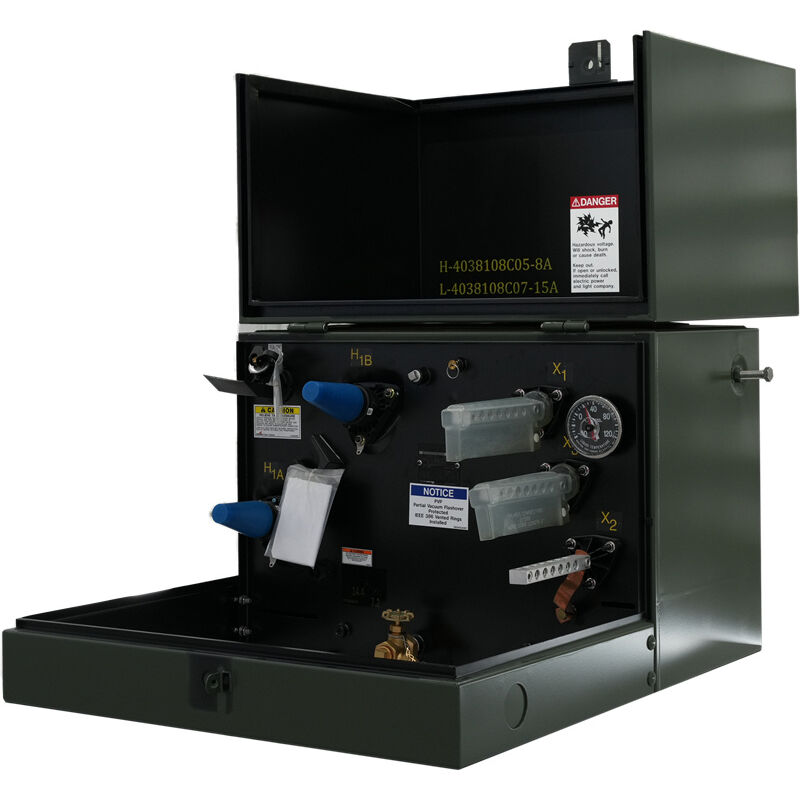
The review meeting for the drawing has started. The project is a 132 kV solar farm in the Middle East, and the room is discussing a selection of substation transformers of 40 MVA. The EPC contractor has sent a datasheet, the owner's engineer is challenging it and procurement is waiting for a final technical comment. At such moments, the parameters that seem benign in the plan book are often the ones that can make or break the project.
For EPC procurement, power transformer key parameters are not a list of items to be checked, they are risk allocation. The five most common mis-selections, in order of frequency, are as follows:
Transformer Impedance and System Short-Circuit Level
The first parameter to be copied from an old project is the impedance. When there is a change in the fault level upstream, a mismatched transformer impedance can result in either exceeding the switchgear ratings or in reducing protection coordination. During the review meeting, ask: is the impedance equal to what was observed in the short circuit study or has it been retained from a previous 110 kV project? A transformer with the incorrect impedance can cause the need to upgrade the switchgear that no one planned for.
Temperature Rise and Cooling Method
They listed the temperature rise as 65 K on the datasheet, but the quotation was based on 55 K. Someone will have to pay for this difference at a later stage. Cooling options for ONAN/KNAN have impact on continuous rating, fan and pump auxiliary power, noise and maintenance. If it's a 40 MVA unit in a hot climate, a 65 K rise design may be acceptable as long as the cooling class and site ambient are correctly specified. The transformer will be derated from day one if this is not taken care of.
Tap Changer Range and Voltage Regulation
Tap changer range is usually given as ±8 × 1.25% by default, but may be required by the grid code to be ±10% or another step. When the tap changer is too small, the transformer's secondary voltage will not be able to span the entire range of operation. During the review, ask if the range of the tap is the result of actual system voltage studies, or if it is a copy of a standard range. This is a common cause of post-award changes.
Losses and Energy Efficiency Basis
The problems that crop up at every turn in the procurement and engineering battle are in fact in the loss evaluation stage. No-load and load losses should be measurements on the same basis (ref. temp., frequency, and load factor). A lower purchase price with higher loss levels can be more expensive over the 25-year period. In the case of renewable and data-center projects, the efficiency basis should not only be based on the minimum compliance requirement, but also relate to the owner's energy model.
Certification and Type Test Evidence
Certification isn't about documentation; it's about proof of design. In the case of global projects, IEC 60076 type test reports, IEEE, UL, CE, ASTA and DEKRA certificates should be checked before award. Routine, type and special tests are witnessed in a CNAS-accredited laboratory and dual 35 kV/110 kV test bays. If the type test report is taken for another rating or design then the EPC is accepting unverified performance.
Ryan Electric, a joint venture with Eaton (USA), manufactures dry-type, VPI, oil-immersed, pad-mounted, power and distribution transformers, compact substations, and substation solutions up to 10 MVA and 132 kV. Our R&D team provides custom-made transformers for a variety of technical, environmental and operational requirements, supported by IEEE, UL, CE, ASTA, DEKRA and CNAS credentials for exports to more than 80 countries with clients like Microsoft and State Grid.
For the next drawing review of your EPC, reach out to our technical experts to get a bespoke substation transformer selection and quote. Share your project country, voltage level and capacity, we will return a parameter review and a customized solution to protect your schedule and budget.