
 EN
EN
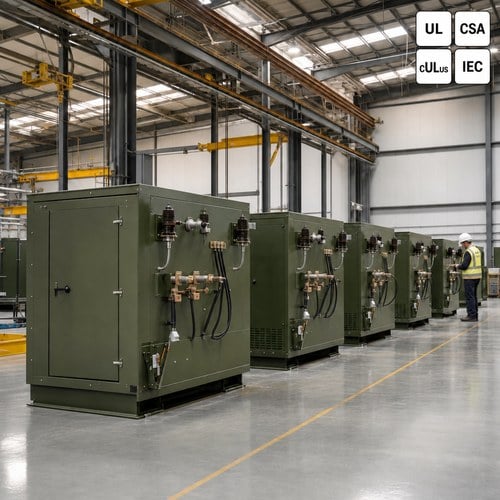
A purchasing manager in Ohio called us in May with a question we hear almost daily now. Not about price, not about kVA — about a date. "If we approve the drawings this week, which week does the transformer ship?" Six years ago we could answer from a spreadsheet. Today the answer takes a production-slot review, a grain-oriented electrical steel check, and a test-bay calendar. He is asking the right question, because in 2026 transformer lead time is the spec that decides whether a project energizes on schedule or drifts into next year.
Why Transformer Lead Times Are Still Long in 2026
The 2026 market still looks nothing like the pre-2021 world. In Wood Mackenzie's second-quarter 2025 survey, large power transformers averaged 128 weeks for delivery and generator step-up units hit 144 weeks — even while distribution-class availability slowly improved. Demand explains the queue: power-transformer demand is up 119% since 2019, distribution-transformer demand is up 34%, and Wood Mackenzie modeled 2025 supply deficits near 30% for power units and 10% for distribution units. POWER magazine's January 2026 analysis of the transformer market walks through every one of those numbers.
The transformer shortage is not one shortage. It is four demand waves landing on the same factory floors: AI data centers pulling megawatts by the campus, reshored manufacturing and EV charging infrastructure, a record renewables pipeline, and — the quiet one — an aging fleet. More than half of the roughly 40 million distribution transformers in service in the United States are beyond their expected service life, so a large share of every order book is pure replacement demand that never goes away. Add volatile grain-oriented electrical steel (GOES) and copper prices to that mix, and a 52-week quote is not a promise; it is a starting point for negotiation.
Here is the part most buyers miss: the squeeze is not evenly spread. Some classes have loosened, others are tightening, and knowing which bucket your project falls into changes your whole transformer procurement strategy.
How the Shortage Splits by Transformer Class
| Transformer Class | 2026 Supply Pressure | What Buyers See |
| Three-phase pad-mounted (500-5,000 kVA) | Tightest — analysts expect the pad-mount shortage to worsen | Multi-year waiting lists at some US factories; spec changes cost months |
| Single-phase and pole-mounted distribution | Improving but still extended | Better than the 2023 peak, still far above normal |
| Dry-type, cast resin and VPI | Moderate | Shorter schedules than oil-immersed, especially below 5 MVA |
| Medium power (5-60 MVA) | Severe | 18-30 month windows are common; factory slots are rationed |
| Large power and GSU (above 60 MVA) | Most severe | 128-144 week averages; custom design dominates the timeline |
The U.S. Department of Energy's Distribution Transformer Working Group — the federal government's main administrative response to the transformer shortage — spent 2025 and 2026 attacking the squeeze from the specification side: publishing component interchangeability guidance and pushing utilities to cut the number of transformer SKUs they order, so factories can batch production instead of re-engineering for one-off builds. DOE's distribution transformer supply chain page is the best free briefing on where those efforts stand.
The class table matters for one reason. A buyer who treats a pad mounted transformer like a commodity makes the same mistake as a buyer who treats a large power transformer like one: they leave the schedule to the last minute, then pay for the panic in price, in rework, or in project delay.
Inside a Factory Schedule: Where the Weeks Actually Go
When a customer asks why a certified unit takes eight months, we walk them through the calendar instead of defending it. First comes the design freeze: drawings, loss guarantees, impedance, and the accessory list locked and signed — every change after that point reopens the materials list. Then the core steel order, where GOES delivery itself can run ten to sixteen weeks, because the mills are the true bottleneck of the whole industry. Winding production follows: copper or aluminum coils, wound, insulated, and processed in batches to keep quality repeatable.
Assembly is the part people imagine, but testing is where a certified transformer earns its timeline. A UL-listed unit goes through routine tests — turns ratio, polarity, no-load loss and excitation current, load loss and impedance, and a full temperature-rise test on the first unit of each design — and the test-bay calendar is genuinely contested space at every factory we know. Add a third-party witness inspection and the packing schedule, and eight months is not padding; it is physics plus paperwork.
We quote dry type transformers on faster schedules than oil-immersed units of the same rating, because the supply chain is simpler: no tank fabrication, no oil processing, no conservator or breather package. It is one more reason the technology choice is also a schedule choice.
Last year a utility contractor asked us to compress a standard schedule by half for a substation that had slipped. We could not invent steel that did not exist, but we could offer what the market rarely gives: an honest slot — a fixed production window with materials reserved, instead of a vague "around Q3." That conversation is why we now publish slot availability before engineering starts.
Five Procurement Moves That Actually Save Time
Freeze the spec before you shop. Every revision re-enters the queue. Decide voltage, impedance, loss level, and accessories once, and get the drawing-approval cycle done in days, not months.
Buy standard configurations when you can. Factories push standard kVA and voltage combinations through faster. The 1,000 kVA, 13.8 kV delta to 480Y/277 V pad-mounted unit is a production-line item at most plants; the oddball rating is a custom build with a custom price and a custom schedule.
Ask for a production slot in writing. A delivery estimate is not a reservation. Ask which week the unit enters winding and which week it enters the test bay — and what happens to your slot if materials slip.
Order spares now, not after a failure. The cheapest transformer you will ever buy is the one that replaces a failed unit without an eighteen-month wait. Utilities we work with buy two units where they used to buy one.
Name the certification in the RFQ. UL for the United States, CSA for Canada, cULus where both matter, IEC for most other markets. A certification change after design is a re-test and a schedule reset.
None of these moves is exotic. They are the difference between buyers who treat transformer procurement as a calendar discipline and buyers who treat it as a purchase order — and in 2026 the calendar wins.
What a Realistic 2026 Schedule Looks Like
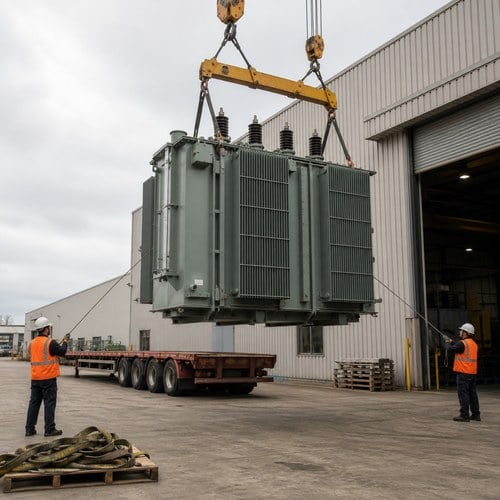
If your project needs transformers in 2027, the honest planning window today looks roughly like this: dry type transformers below 5 MVA, nine to twelve months from drawing approval; three-phase pad mounted transformers, twelve to eighteen months with UL certification; medium power units, eighteen to thirty months; large power and GSUs, two years or more. These are market windows, not our quote — they shift quarterly, which is why a transformer procurement number from March should be re-verified in September.
The calendar advice we give every customer is the same: if the project is funded, start the transformer conversation before the contractor is selected, not after. Reserve the slot early, freeze the spec at award, and use the design window to settle certification details. Twelve months of transformer lead time feels like a long time — until it is gone.
Ryan Electric's Answer to the Lead Time Problem
Our answer is not a magic schedule; it is structure. As an official joint-venture partner of Eaton since 2023, our factory in Jiangsu operates under the kind of production planning and quality discipline large OEMs expect — across a 120,000 m2 plant with 180+ sets of production equipment and 37 patents. We build oil immersed transformers, dry type transformers, and three-phase pad mounted transformers against UL, CSA, cULus, and IEC certification programs, which means the certification question is answered before quoting, not after.
For North American buyers the difference shows up in the quote package: a reserved production slot, a named test-bay week, and a certification file list that arrives with the drawing set. We cannot shorten the steel mills' delivery time. We can make every week between approval and shipment accountable.
Start the Conversation Before Your Schedule Forces It
If you are sourcing transformers for a 2027 project, send your rating, voltage, and certification target through ryantransformers.com and we will come back with a real production window — not optimism. And if you are still comparing unit types, our guide to transformer temperature rise explains the spec that quietly shapes your delivery schedule and your asset life. A realistic transformer lead time starts with a conversation, and the earlier that conversation happens, the shorter the wait looks.
About the Author: This article was written by the engineering and sales team at Ryan Electric (Jiangsu Ryan Electric Co., Ltd.), a transformer manufacturer founded in 2007 serving utilities, EPC contractors, and industrial buyers across North America, Latin America, Southeast Asia, and the Middle East with UL, CSA, cULus, and IEC certified oil-immersed, dry-type, and pad-mounted transformers.
Table of Contents
- Why Transformer Lead Times Are Still Long in 2026
- How the Shortage Splits by Transformer Class
- Inside a Factory Schedule: Where the Weeks Actually Go
- Five Procurement Moves That Actually Save Time
- What a Realistic 2026 Schedule Looks Like
- Ryan Electric's Answer to the Lead Time Problem
- Start the Conversation Before Your Schedule Forces It