
 EN
EN
Last July, a utility in the U.S. Southwest called us about a 500 kVA pad-mounted transformer that kept tripping its winding temperature relay. The unit was four years old, load was below nameplate, and their local contractor was ready to replace it. When we pulled the thermal history, the answer was plain: the cabinet was installed against a wall with the cooling fins facing a concrete barrier, and the ambient inside the enclosure hit 52°C on summer afternoons. The transformer wasn't overloaded. Its transformer temperature rise budget was simply being spent before the load even started. That one conversation is why this article exists — because most buyers never think about temperature rise until a relay trips, and by then the insulation has already been cooking.
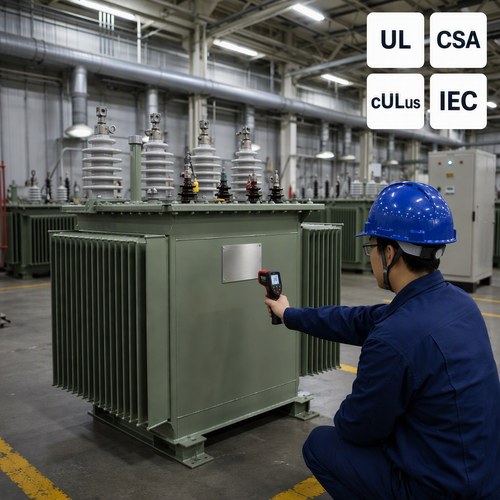
What Transformer Temperature Rise Means on a Nameplate
Transformer temperature rise is not a temperature. It is the number of degrees the winding (or the oil, for liquid-filled units) is allowed to climb above the ambient temperature at rated load. When a nameplate says 65°C rise, it means the average winding temperature may reach ambient plus 65°C — so at the ANSI/IEEE design ambient of 30°C average, the winding sits around 95°C. The same logic applies to top-oil temperature rise, which is usually specified separately (65°C for self-cooled liquid units, 55°C for forced-cooled operation).
Two things about that number surprise most buyers. First, the ambient baseline is not the worst summer day — it is a 30°C yearly average, with 40°C maximum used as the design ceiling. Second, the hottest point inside the winding is always higher than the average: the hot-spot gradient over the average is typically 10–15°C depending on design and cooling mode. So the real thermal budget looks like this: 30°C ambient + 65°C average rise + roughly 12°C gradient ≈ 107°C at the hottest spot on a normal day. That is not a number pulled from marketing material. It is the arithmetic that IEEE C57.91-2025, the loading guide for mineral-oil-immersed transformers, is built on.
The Temperature Rise Classes You Will See on Real Nameplates
Transformer temperature rise classes on nameplates are standardized, which makes comparing quotations easier — if you know what the codes mean:
| Transformer type | Typical temperature rise class | Notes |
|---|---|---|
| Liquid-immersed, self-cooled (ONAN) | 65°C (avg winding) / 65°C (top oil) | Most common for pad mounted and pole mounted distribution units |
| Liquid-immersed, forced cooling (ONAF/OFWF) | 55°C (avg winding) | Stricter budget because fans/pumps push more load through the same core |
| Dual-rated liquid units (TUK) | 55°C self-cooled / 65°C forced-air | One transformer, two nameplate ratings |
| Dry type, cast resin or VPI | 80°C, 115°C, or 150°C | Class selected by duty; 115°C is the common default for indoor distribution |
| Dry type, high-temperature insulation | 150°C | Used where space is tight and air movement is good |
The class you choose changes the physical design, not just the paperwork. A dry type transformer specified at 80°C rise needs roughly a third more copper and a larger core than the same kVA at 150°C rise — which is why 150°C-class units are cheaper per kVA but run hotter, and why a careless "lowest price" decision on temperature rise class quietly shortens service life. There is no free lunch; the thermal budget always lands somewhere.
Hot Spot Temperature Is What Actually Ages the Insulation
Here is the part most buyers miss: it is not the average winding temperature that ages a transformer — it is the hot spot temperature that drives transformer insulation life. Paper insulation degrades by a chemical process that accelerates sharply with heat. IEEE C57.91 quantifies it: at a 110°C hot spot, the normal insulation life of a mineral-oil-immersed unit is about 180,000 hours — roughly 20.5 years of continuous operation. Increase the hot spot by just 6°C, and the aging rate doubles: the same insulation is spent in about 10 years. That is the "6°C rule," and it is the reason a transformer that runs 8°C hot every afternoon can fail a decade before its nameplate rating suggests.
The physics are documented in the IEEE C57.91-2025 loading guide, and the measurement methods for finding that hot spot are laid out in IEEE C57.169-2023, the IEEE guide for maximum winding temperature rise determination. Neither document makes for light reading, but the takeaway for a buyer is simple: every 6°C you can shave off the operating hot spot roughly doubles the insulation life, and every 6°C you let creep in halves it. That is the single highest-leverage specification on the entire order.
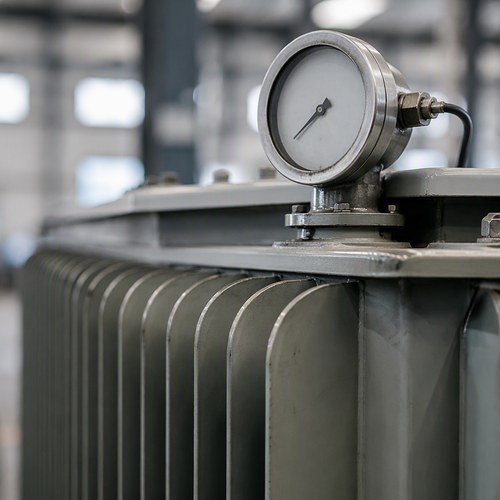
Three Field Mistakes That Push Temperature Rise Past the Limit
We see the same three mistakes repeat across North American and Middle East projects, and none of them is an equipment failure:
Harmonic-laden loads. Harmonic currents distort the thermal picture of transformer temperature rise. A drive-heavy load (VFD pumps, EV chargers, UPS systems) adds eddy-current losses on top of the fundamental load. The transformer may read "60% loaded" on an ammeter while the winding losses behave like 90% load. For these duties, a K-factor rated unit with a lower temperature rise class is the correct call — and asking for the temperature rise test report run at the K-rated load is the only way to verify it.
Blocked cooling. Fins against a wall, cabinet louvers painted over, mulch piled against a pad-mounted enclosure — we found all three on service visits. The nameplate temperature rise assumes free air circulation on every cooling surface. Enclosure design matters as much as the transformer itself; our installation guidance always includes minimum clearance distances for this reason.
Ambient above the design point. A unit designed to a 30°C yearly average that lives in a 40°C+ climate with afternoon peaks at 48°C is spending its thermal budget on the environment before a single kVA of load. For these sites we recommend specifying a temperature rise class one step lower than the default — 55°C instead of 65°C for liquid-filled, or 80°C instead of 115°C for dry type — and documenting the actual site ambient in the RFQ.
None of this is theoretical. Every one of the three above is a case we have walked through with a customer in the last two years.
How to Specify Temperature Rise in Your RFQ
If you are writing an RFQ today, put these four items in writing:
Temperature rise class — state 65°C (liquid) or 115°C (dry type) as the baseline, and lower it if your site ambient or load shape demands it.
Ambient conditions — give the yearly average and the absolute maximum with solar loading on the enclosure, not just "hot climate."
Load profile — if the unit will run at 100% load for hours, say so. A transformer sized with margin on temperature rise handles peaks without burning its aging budget.
Test evidence — require the routine test report to include the measured temperature rise values from the factory test, not just the guaranteed figures. Per IEEE C57.12.90, the temperature rise test runs the unit at full load until temperatures stabilize, and the measured values are what you want on paper.
The most common question we get from buyers is whether a slightly oversized transformer is worth the money. The honest answer: an oversized transformer runs at a lower transformer temperature rise under the same load, which directly extends transformer insulation life — so in hot climates and high-utilization applications, the margin pays for itself long before the transformer is retired.
How Ryan Electric Validates Temperature Rise Before Shipping
Temperature rise is a design promise until a test proves it, so we treat it that way. Whether the order is an oil-immersed pad mounted unit or a dry type transformer, every production unit that leaves our 120,000 m² factory in Jiangsu carries a routine test report that includes the temperature rise test performed in our own test bay — full load applied, oil and winding temperatures logged until stable, measured values compared against the guaranteed limits. As an Eaton joint venture partner since 2023, with UL, CSA, IEEE, and DEKRA certifications in our portfolio, we follow the same test discipline and documentation standards that North American utilities expect from their domestic suppliers.
When a customer specifies 65°C rise on a pad mounted transformer for a Canadian project, the test report they receive shows the measured rise, the ambient during test, and the corrected values per the standard — not a photocopy of the drawing. That documentation is what lets their engineer close the file and move on. It is also what lets us stand behind the unit's temperature rise warranty in writing.
Ready to Specify Your Next Transformer?
The transformer temperature rise you specify today decides when the insulation inside the tank starts aging. Get the class right, give the unit room to breathe, and document the test — and a 20-year service life is a realistic expectation. If you want help selecting the right temperature rise class for your site conditions, send us your kVA rating, load profile, and ambient data through the contact form on ryan-transformers.com — our engineers will come back with a specification recommendation and a realistic schedule, not a sales pitch.
About the Author: This article was written by the engineering team at Ryan Electric, an Eaton joint venture partner and UL/CSA-certified transformer manufacturer in Jiangsu, China, serving utility, data center, and renewable energy clients across North America, the Middle East, and Southeast Asia.
Table of Contents
- What Transformer Temperature Rise Means on a Nameplate
- The Temperature Rise Classes You Will See on Real Nameplates
- Hot Spot Temperature Is What Actually Ages the Insulation
- Three Field Mistakes That Push Temperature Rise Past the Limit
- How to Specify Temperature Rise in Your RFQ
- How Ryan Electric Validates Temperature Rise Before Shipping
- Ready to Specify Your Next Transformer?