
 EN
EN
What is the difference between a power transformer and a distribution transformer?
 Direct Grid Mapping: Transmission vs. Final Delivery
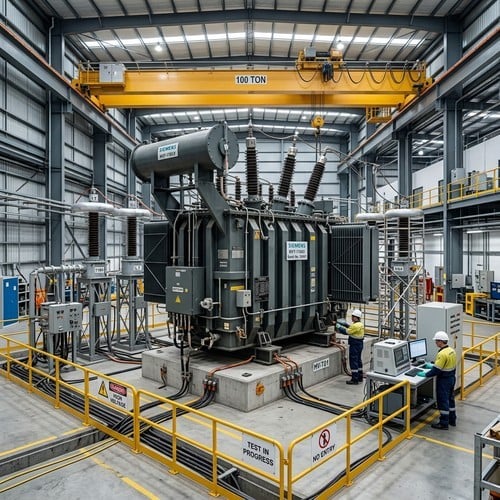
The grid doesn't care about your procurement budget. It cares about where you drop the asset. I’ve seen dozens of orders stall because someone confused a power unit with a distribution unit. Let's fix that. A power transformer is your link between generation and high-voltage transmission. Think 33kV up to 765kV. These are massive, localized hubs. They handle over 10MVA, often reaching hundreds.
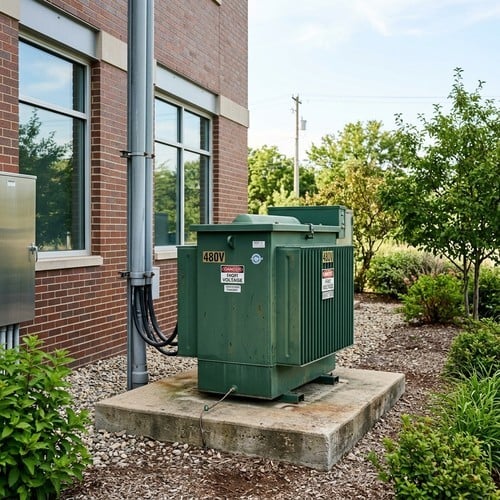
Distribution units? They are the edge. They step down 11kV, 22kV, or 35kV to something you can actually use—like 480V or 208V. This is the green cabinet you walk past on the sidewalk. The difference between power and distribution transformer logic isn't just terminology. It’s physical stress. We build both at our 120,000㎡ facility in Jiangsu, but the assembly lines never cross for a reason.
Operational Load: Steady State vs. Radical Fluctuations
Power transformers are steady. They sit at generation sites or major transmission points where the load is a constant river. Engineers design these cores for peak efficiency at 100% load. Why? Because they almost never run at half-speed. Load losses (copper losses) are the variable that kills your TCO here.
Distribution is different. It’s volatile. A commercial park or a residential block has massive peaks during the day and ghost-town levels at night. But the core? It stays energized 24/7. That excitation creates continuous iron losses. To maximize the grid's savings, we engineer distribution units for peak efficiency at 50% to 70% load. If you use a power unit here, you're literally burning money during off-peak hours.
Physical Hardware and Thermal Realities
Size tells the story. Power transformers require active, aggressive cooling. You'll see radiators and fans everywhere. ONAN, ONAF, OFAF—these aren't just labels; they are survival systems for 500MVA loads. The core must survive brutal short-circuit forces that would tear a smaller unit apart.
Distribution equipment focuses on safety and footprint. In urban settings, we almost always deploy a dry type transformer. These use air or vacuum-cast resin. No oil. No fire risk. Safe enough to put next to a hospital entrance. Our production in China focuses on these compact, safe layouts where fenced enclosures aren't an option.
Technical Codes: The IEEE/IEC Baseline
Compliance isn't optional. Sourcing from a power transformer manufacturer or a distribution transformer manufacturer requires a look at the BIL (Basic Impulse Insulation Level). Power units need massive BIL ratings. They are exposed to direct lightning strikes over miles of transmission wire. Distribution units focus on short-circuit resilience and cabinet security. All engineering must follow ANSI/IEEE C57.12.00 or IEC 60076 standards. We run every unit through full routine and type tests. Temperature rise, impulse tests—we verify every line item in the transformer specifications before the truck leaves the dock.
Quick Spec Comparison
|
Feature |
Power Unit |
Distribution Unit |
|
Voltage Profile |
> 33,000 V |
< 35,000 V |
|
Efficiency Target |
Max @ 100% Load |
Max @ 50-70% Load |
|
Cooling Logic |
Active (Fans/Pumps) |
Passive / Dry |
Common Field Questions
Why is a distribution core so large?
To kill iron losses. Since it’s energized 24/7 with low average load, a larger core with lower magnetic flux density keeps the grid's no-load power consumption low. It's a trade-off: more steel upfront for decades of energy savings.
Short-circuit resilience?
Distribution units face more faults. Fallen lines, accidents—faults happen daily at the edge. They must survive frequent secondary shorts. Power units face fewer, but far higher energy events.
Final Takeaway
Match the unit to the grid coordinate. Use a power unit for distribution? Energy waste. Use a distribution unit for power transmission? It’ll overheat and fail. Physics doesn't compromise.
Need a project-specific spec check? Talk to our engineers directly. No sales fluff. Just data.