
 EN
EN
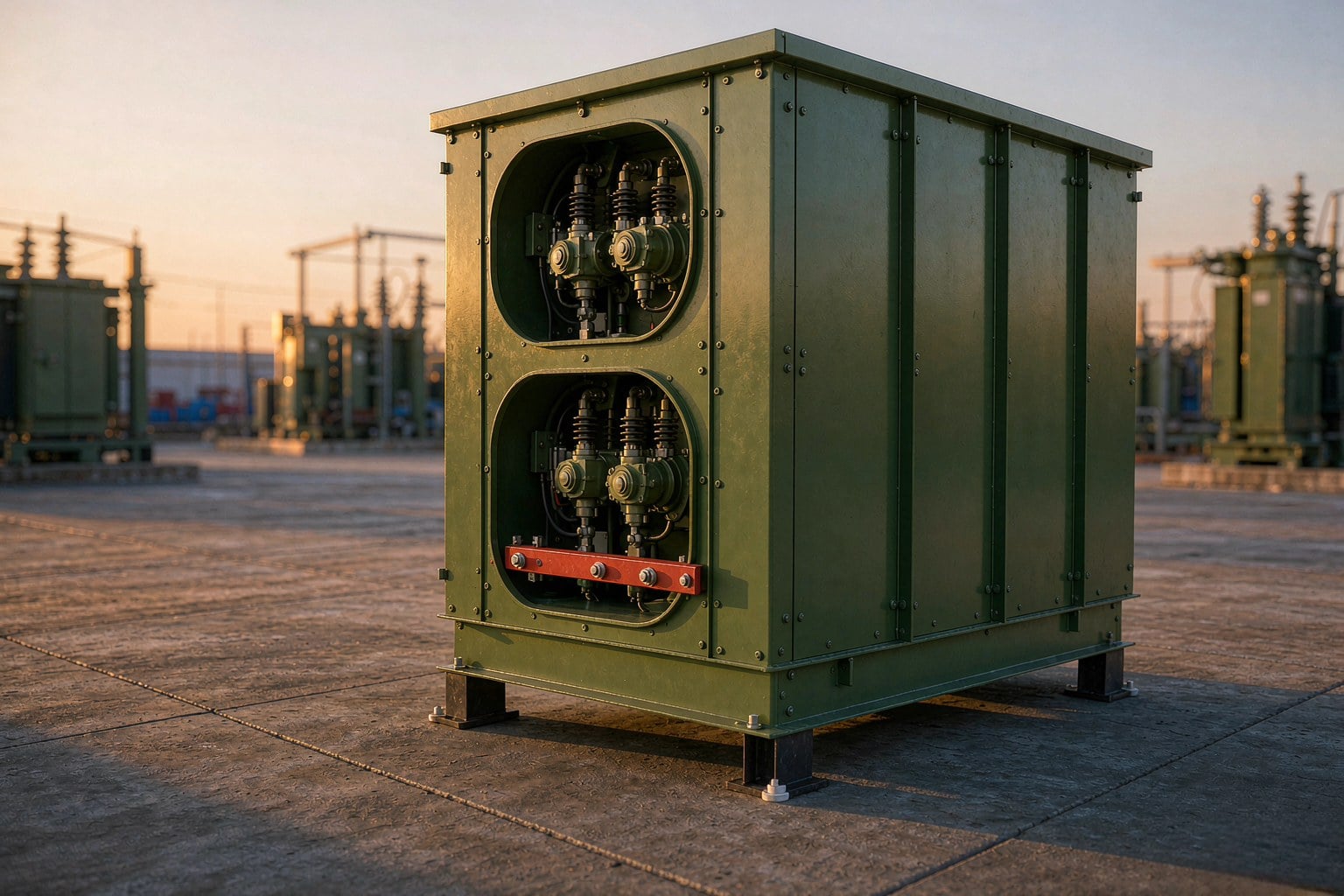
A transformer can be built exactly to spec, pass every factory test, and still sit on its concrete pad with nobody allowed to energize it. In Canada, what decides that outcome is not whether the unit works. It is whether the provincial inspector accepts the approval evidence on the nameplate.
That catches out buyers who are used to the American system, where one national code and one set of recognized marks cover the whole country. Transformer approval in Canada does not work that way. Electrical safety is administered province by province, and each province adopts its own edition of the code on its own timetable.
Who enforces transformer approval in Canada?
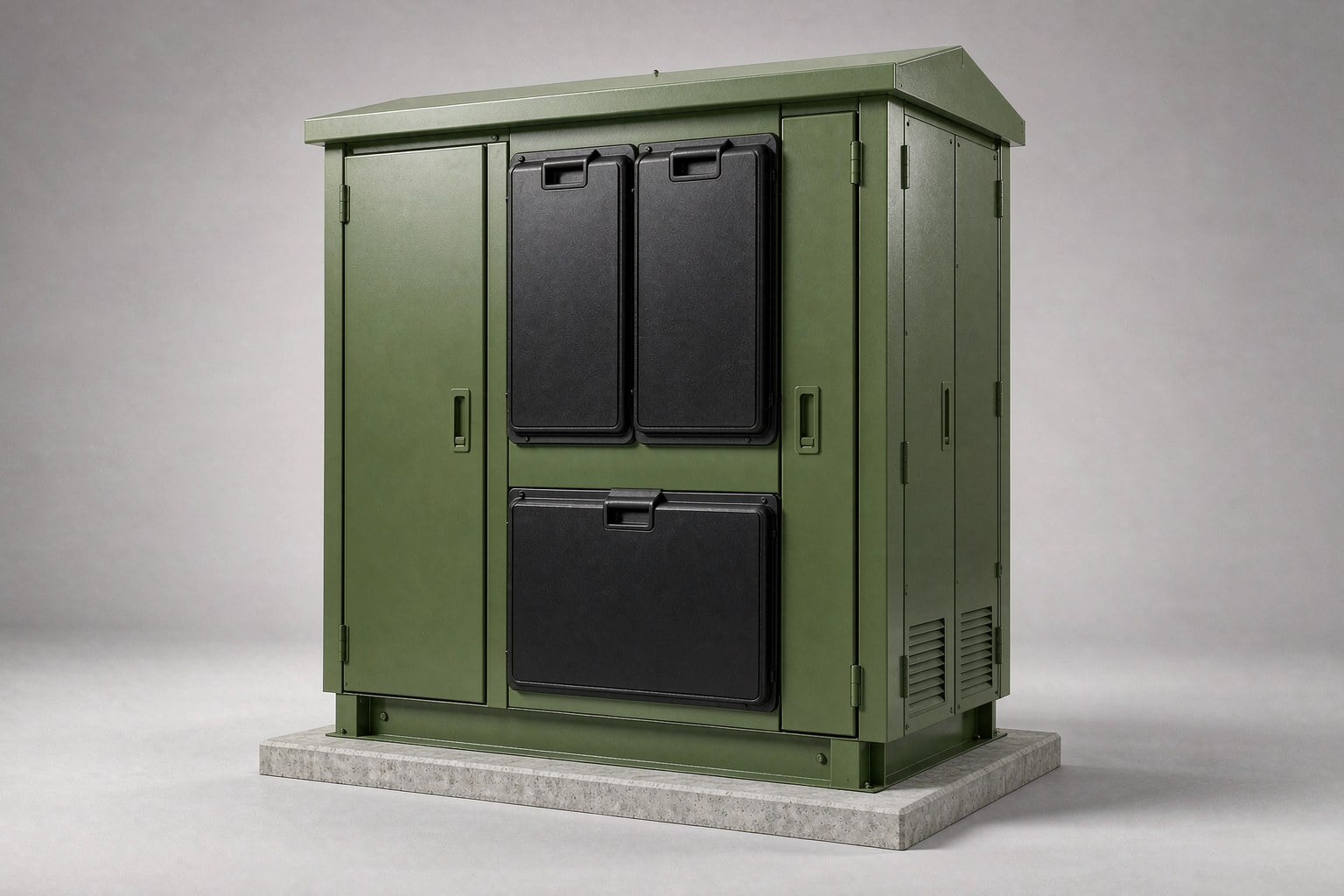
The provincial authority having jurisdiction, or AHJ. There is no federal electrical safety regulator in Canada. Ontario’s AHJ is the Electrical Safety Authority (ESA), British Columbia’s is Technical Safety BC, and Quebec’s is the Régie du bâtiment du Québec (RBQ). Each province writes its own regulation, adopts its own code edition, and sends its own inspector, whose decision is the one that sticks.
The technical baseline is shared, though. CSA C22.1, the Canadian Electrical Code Part I, is a model code published by CSA Group. Part II, the C22.2 series, governs how equipment is built, tested and marked. Neither has legal force until a province adopts it, and provinces adopt at different times, sometimes with local amendments layered on top.
The rule that governs your transformer is short. Clause 2-024 of CSA C22.1 requires that electrical equipment used in an installation be approved, and be of a kind, type and rating approved for the purpose it serves.
Approved is a defined term, and narrower than most people assume. Equipment qualifies in one of three ways: it carries a certification mark from a body accredited by the Standards Council of Canada (SCC); it has been field-evaluated for that specific installation under CSA SPE-1000; or the regulatory authority has otherwise accepted it as conforming.
Two things fall outside that definition. A factory test report is evidence, not approval. And a transformer approval in Canada question cannot be answered with a CE mark, which is a European declaration and carries no standing with a provincial inspector.
| Province / Territory | Authority having jurisdiction (AHJ) |
|---|---|
| Ontario | Electrical Safety Authority (ESA) |
| British Columbia | Technical Safety BC (some municipalities self-administer) |
| Quebec | Régie du bâtiment du Québec (RBQ) |
| Alberta | Municipal Affairs / Safety Codes system |
| Saskatchewan | Technical Safety Authority of Saskatchewan (TSASK) |
| Manitoba | Provincial electrical inspection services |
| Atlantic provinces | Provincial technical-safety / labour departments |
Which edition of the code is in force where you are building?
This is the difference that surprises people most, and it is entirely administrative. The 26th edition of the Canadian Electrical Code, CSA C22.1:24, was published in March 2024. No province adopts a new edition on publication day.
Alberta declared C22.1:24 in force on April 1, 2025. British Columbia followed on March 4, 2025, and Ontario on May 1, 2025, through the 29th edition of the Ontario Electrical Safety Code. Saskatchewan, Manitoba, Quebec and most of Atlantic Canada were still working to the 25th edition, CSA C22.1:21, as of mid-2026.
Why should a transformer order care? Because a handful of requirements changed between editions, and because an interpretation issued under one edition may not survive into the next.
Alberta publishes its interpretations as STANDATA documents, and those are tied to a specific code edition. Guidance your contractor relied on two years ago may simply no longer apply. Treat the edition number as a project input, not a footnote, and confirm it with the AHJ for the actual job site before the specification is frozen. Fixing an edition mismatch after the steel is on the ground is expensive.
| Province | Code edition in force (as of mid-2026) | Effective date |
|---|---|---|
| Alberta | 26th – CSA C22.1:24 | April 1, 2025 |
| British Columbia | 26th – CSA C22.1:24 | March 4, 2025 |
| Ontario | 26th – CSA C22.1:24 (OESC 29th ed.) | May 1, 2025 |
| Saskatchewan | Working to CSA C22.1:21 – confirm current edition with TSASK | Confirm with TSASK |
| Manitoba | Working to CSA C22.1:21 – confirm current edition with the provincial inspection service | Confirm with provincial inspection service |
| Quebec | Working to CSA C22.1:21 – confirm current edition with the RBQ | Confirm with RBQ |
| Atlantic provinces | Working to CSA C22.1:21 – confirm current edition with the provincial AHJ | Confirm with provincial AHJ |
British Columbia: a named person signs the declaration
BC rewards study because it makes responsibility personal. Technical Safety BC requires a Field Safety Representative (FSR) to be named on every electrical permit application. The FSR is a certified individual, not a company, and they declare that the work complies with the Safety Standards Act and the Electrical Safety Regulation.
FSR class decides who can sign for what. Class A carries no voltage or ampere limit. Class B covers installations up to 750 volts. Class C is restricted to single-phase work at or below 150 volts to ground and 200 amps.
On a project with a primary-voltage transformer, the class of the FSR named on the permit determines whether the declaration can be made at all.
BC also splits permitting between the province and certain municipalities. Technical Safety BC issues electrical installation permits across most of the province, but Burnaby, Maple Ridge, North Vancouver, Surrey, Victoria, Vancouver and West Vancouver administer their own. A project in Vancouver is not administratively the same as one in Kelowna, even though both sit in BC.
There is a second permit most buyers have never heard of. BC requires an electrical operating permit where supply to privately owned equipment exceeds 750 volts, or where the main transforming equipment is rated above 250 kVA. Any substation transformer worth discussing crosses that line. Operating permits renew annually and must also name an FSR.
Alberta: STANDATA, local permitting, and a second code for the utility side
Alberta runs a Safety Codes system rather than a single provincial authority. Municipal Affairs sets the codes, the Safety Codes Council handles accreditation, and permits are issued locally by an accredited municipality, a contracted inspection agency, or the Alberta Safety Codes Authority where no municipality is accredited.
So the paperwork varies by town. Two Alberta projects with identical single-line diagrams can face different forms and different submission sequences.
The province also publishes STANDATA: province-wide interpretations, recommended practices and variances from specific rules. They resolve ambiguity at scale, but they are edition-specific, so check for a current STANDATA before finalizing the installation.
One more piece is easy to miss. Most of an Alberta installation follows the Canadian Electrical Code. Utility-owned infrastructure does not. It follows the Alberta Electrical Utility Code instead.
Confirm in writing where the utility’s responsibility ends and the customer’s begins. That boundary decides which rulebook, which inspector, and often which party owns the transformer.
Ontario: ESA permits, plan review, and the connection authorization
Ontario’s Electrical Safety Authority administers the Ontario Electrical Safety Code, which took effect in its 29th edition on May 1, 2025, aligned with CSA C22.1:24. ESA issues permits, runs inspections, and issues the authorization that lets the supply authority energize the service.
Larger services also pass through plan review before field work starts. Rule 2-010 requires drawings and specifications to be submitted for higher-capacity services and stand-alone generation, and the review threshold has been under active revision, so confirm the current threshold with ESA. For a transformer project, plan review is where the approval evidence gets examined on paper, months before anyone sees a nameplate.
The practical consequence: in Ontario, certification documents are a design-phase deliverable. A supplier who can only produce them at shipping time is a supplier who will delay your inspection.
Quebec: the RBQ, and French on the label
Quebec is administered by the Régie du bâtiment du Québec under the Construction Code, Chapter V – Electricity, built on the CE Code with Quebec amendments.
Quebec’s language requirement has a technical consequence that reaches the nameplate. The general requirements standard in the C22.2 series, CSA C22.2 No. 0, requires caution and warning markings on electrical equipment to appear in English and French. The exception is narrow: where a product is intended for use outside Canada, other languages are permitted.
A transformer headed for a Quebec site does not qualify for that exception. A unit with English-only warning labels is not nearly compliant. It fails a marking requirement of the same standard it is certified against.
The Prairies and Atlantic Canada
Saskatchewan, Manitoba and the Atlantic provinces are usually less administratively tangled than BC, Alberta or Ontario. The same principle applies anyway: the inspector signs off, and the inspector can withhold energization.
Saskatchewan is covered provincially by TSASK. Manitoba operates through provincial electrical inspection services. In Atlantic Canada the function sits inside provincial technical-safety or labour departments, and those names shift when governments restructure. A mark or report that satisfies one AHJ should still be confirmed with the one that will actually sign the installation.
Utility-side or customer-side? That decides who approves the transformer
This fork determines everything downstream, and it is set by your metering arrangement rather than your load. It is also the first thing worth settling in any transformer approval in Canada review, because it decides who ends up owning the paperwork.
With secondary metering, the utility owns the transformer and measures power after it. You buy a service, not a transformer, and the utility’s own material specification governs what lands on the pad. With primary metering, you own the transformation. The transformer, the primary switchgear, the protection and the losses are yours, which earns a lower rate and means the CE Code applies to equipment you own and must prove is approved.
Settle the question at design stage. Projects that discover it during commissioning discover it as a change order.
What the inspector looks for at site acceptance
Field inspection is narrower than the anxiety around it. The inspector checks that the equipment is approved for the purpose, that the approval evidence matches the actual unit, and that installation rules were followed.
In practice, a short list decides the outcome. The certification mark on the nameplate, matching the exact model and rating delivered. The standard number the unit was certified to, which has to fit the application.
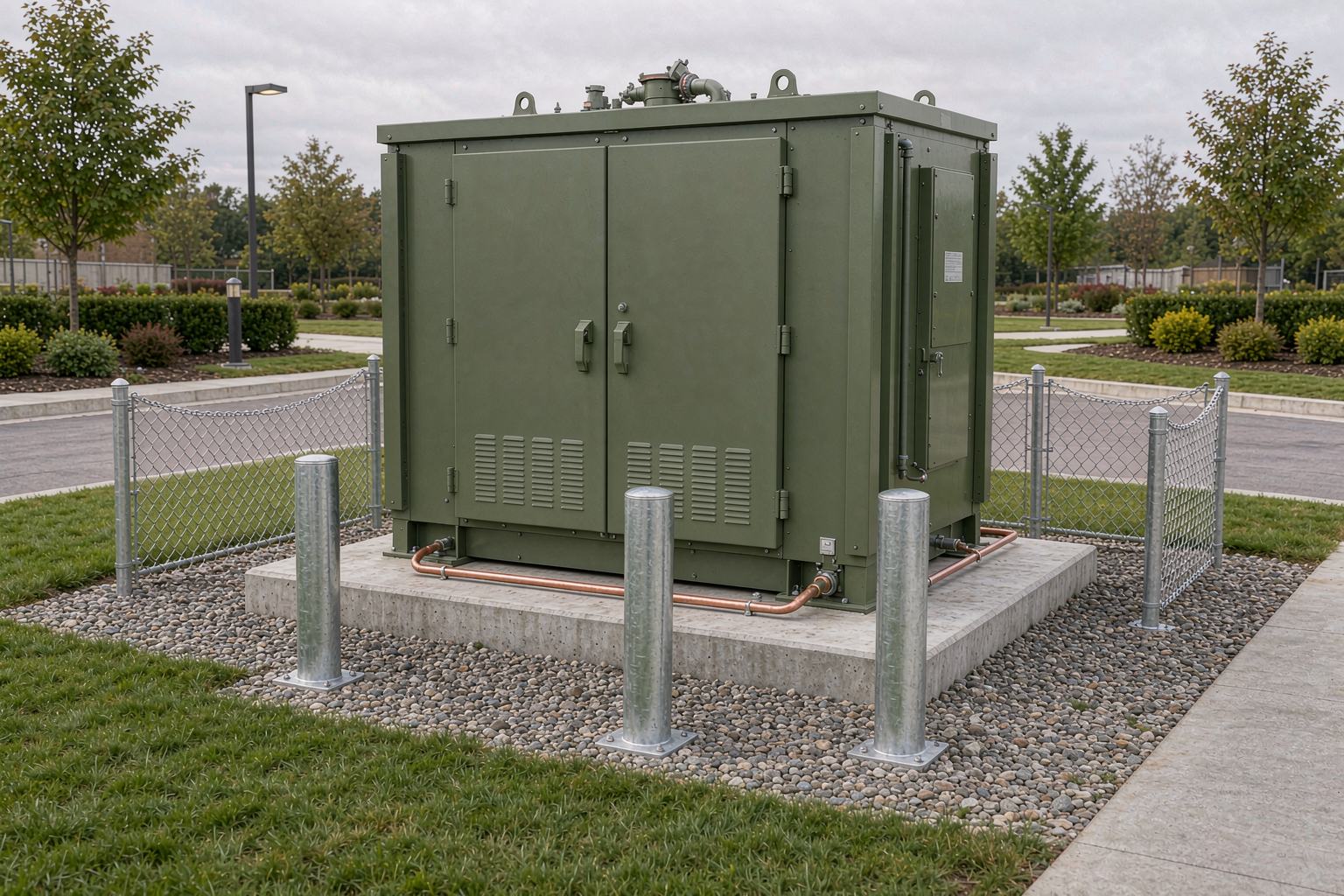
Then the supporting paperwork: test report figures that match the nameplate, bilingual caution and warning markings, and in BC a valid operating permit with a correctly classed FSR named on it.
Worth stating plainly, because it causes real losses: certification attaches to models, not to companies. Look up the supplier’s file number and confirm it covers the model you are buying.
None of this is hard when the documents exist before the truck arrives. It turns expensive afterward, because a transformer that cannot be energized is a project that is not finished.
Have a project in Canada? Get a free technical quote – our engineers answer within one business day.
How Ryan Electric handles provincial documentation
Our approach is to treat approval as a project file that opens before the order, not a packet that travels with the crate.
We hold both CSA and UL certification, so one production line serves Canadian and US projects, and units can be supplied under a cULus listing that certifies to both sets of requirements at once. Our standard range is built to the Canadian counterparts of the ANSI/IEEE C57 series: CSA C88 for liquid-filled power transformers, CSA C9 for dry-type, CSA C2.1 for liquid-filled distribution units, and the CSA C227 family for pad-mounted distribution transformers. Dry-type construction follows CSA C22.2 No. 47.
Every unit runs the same sequence before crating: turns ratio, polarity, no-load and load loss, applied and induced voltage, and a temperature-rise test on a batch sample. Our laboratory is CNAS-accredited, with accreditation assessed by DEKRA under ISO/IEC 17025, so pre-testing is completed in-house ahead of any witness visit.
Ryan Electric has built transformers since 2007 at a 120,000 m² facility with more than 180 sets of production and testing equipment and 37 patents. Since 2023 we have operated as a joint venture partner of Eaton, which tightened the process documentation our North American customers were already requesting.
Bilingual nameplate marking and the certification file number for the exact model quoted can be confirmed in writing before you sign.
For a closer look at how the US side of this works, see our guide to what UL Listing really means for transformers, and our checklist for pad-mounted transformer installation site requirements.
FAQ
Does a transformer need CSA certification to be installed in Canada?
It needs to be approved in the sense Clause 2-024 uses, which is broader than any single mark. A CSA mark works. So do cULus, cCSAus and cETLus. For a single unit with no recognized mark, field evaluation under CSA SPE-1000 is the route.
Is a US UL Listed mark accepted in Canada?
No. A mark valid in Canada carries a c indicator. A plain UL Listed mark with no c certifies compliance to US standards only, and a provincial inspector will not accept it.
Who decides whether a transformer is approved?
The provincial authority having jurisdiction. Canada has no national electrical regulator. The AHJ for the project site issues the permit, conducts the inspection, and makes the final call on transformer approval in Canada.
Can two provinces require different documentation for the same transformer?
Yes, and they often do. Code editions differ, local amendments and variances differ, and permit administration differs. Confirm with the specific AHJ for the site.
Have a project in Canada? Get a free technical quote – contact our engineering team and we will map your specification to the AHJ that will inspect it.
Table of Contents
- Who enforces transformer approval in Canada?
- Which edition of the code is in force where you are building?
- British Columbia: a named person signs the declaration
- Alberta: STANDATA, local permitting, and a second code for the utility side
- Ontario: ESA permits, plan review, and the connection authorization
- Quebec: the RBQ, and French on the label
- The Prairies and Atlantic Canada
- Utility-side or customer-side? That decides who approves the transformer
- What the inspector looks for at site acceptance
- How Ryan Electric handles provincial documentation
- FAQ