
 EN
EN
Last spring, a utility engineer in California asked us to price a 25 MVA unit for a substation about two hundred meters from a protected wetland. The spec sheet said mineral oil, the way it always had. His question stopped our quoting engineer mid-sentence: "If this unit ever leaks, who pays for the cleanup — and will the fire marshal accept the setback?" In 2026 that question is routine, and the answer usually comes down to one line on the data sheet: mineral oil or an ester transformer fluid.
For the better part of a century, mineral oil was the default insulating liquid for liquid-filled transformers, and nobody questioned it. That is changing for reasons that have little to do with electrical engineering and everything to do with where transformers now sit: closer to buildings, inside battery energy storage plants, next to data centers, and beside waterways where a leak becomes a headline. Natural ester fluids — the vegetable-oil-based liquids best known under the FR3 trade name — have moved from a niche option to more than five million installations worldwide with zero reported fires in that fleet, a field record documented by the fluid's developer on the Cargill FR3 page.
Why the Fluid Question Is No Longer a Footnote
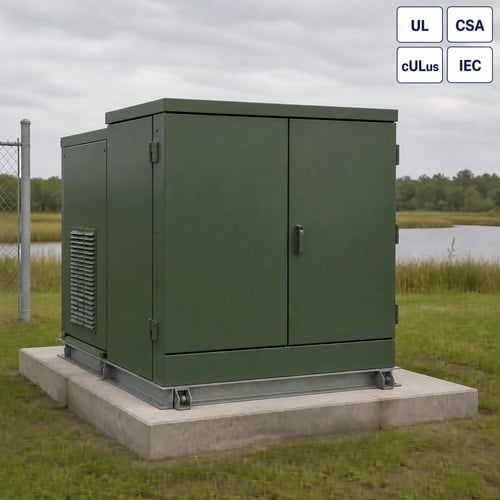
Four pressures pushed the fluid decision out of the footnote and into the review meeting. Fire codes are stricter about what can sit near occupied buildings. Environmental permits now ask what happens if a unit leaks into soil or water. Battery storage and AI data center projects put high-voltage equipment meters away from assets that cannot tolerate a fire. And insurers have started asking which fluid is in the tank before they price the policy.
We see the shift in our own RFQs. Ten years ago, the fluid line on a pad-mounted or power transformer spec read "mineral oil" by default and nobody edited it. Today a growing share of requests carry "FR3 or equivalent" with a required fire point, and buyers want the fluid test report attached to the factory acceptance documents. The fluid is no longer a factory decision — it is a project decision.
Ester Transformer Fluid vs Mineral Oil: The Core Differences
Before comparing performance, it helps to know what each liquid actually is. Mineral oil is a refined petroleum hydrocarbon governed by ASTM D3487. Natural ester fluids are made from vegetable oils and governed by ASTM D6871, with acceptance and maintenance practice guided by IEEE C57.147 — you can check the scope of that guide on the IEEE C57.147 standard page. FR3, developed by Cargill and used across Eaton's Envirotran line, is the best-known natural ester and is classified as a K-class, high-fire-point fluid. The gap between a mineral-oil design and an ester transformer fluid design is not a datasheet swap — it shows up in temperature-rise tests, gasket selection, and maintenance programs.
| Property | Mineral oil | Natural ester (FR3-type) |
| Base chemistry | Refined petroleum hydrocarbons | Vegetable-oil esters (K-class fluid) |
| Governing specification | ASTM D3487 | ASTM D6871; IEEE C57.147 |
| Typical fire point | 160–180 °C | Above 300 °C — roughly double mineral oil |
| Moisture saturation | Low; free water settles into paper | High; fluid absorbs water, keeps paper drier |
| Effect on paper insulation | Standard aging | Up to 8x longer paper life in retrofit field data |
| Biodegradability | Not readily biodegradable | ~100% biodegradable in as little as 10 days (OPPTS 835.3100) |
| Relative fluid cost | Baseline | Higher fluid price, lower lifetime ownership cost |
Two rows of that table drive most engineering decisions. Fire point decides where code lets you put the unit. Moisture handling decides how long the paper insulation survives. Everything else — cost, maintenance, retrofit — follows from those two.
Fire Safety: What the Codes Actually Reward
In North America, the National Electrical Code treats liquid-filled transformers by the fire point of their liquid. Mineral oil, with a fire point typically in the 160–180 °C band, is forced outdoors or into fire-resistant vaults in most occupancies. NEC 450.23 opens a different door for less-flammable liquids: a liquid with a listed fire point of 300 °C or above can be installed indoors and closer to structures, with spill containment in place of a vault. Natural esters clear that bar by a wide margin — FR3's fire point is more than double mineral oil's — which is why Eaton lists its Envirotran FR3-filled pad-mounted units, from 45 to 10,000 kVA with primaries to 34.5 kV, for indoor and outdoor use through FM Global, with UL/cUL available on most ratings. You can review those ratings on the Eaton Envirotran product page.
The practical effect is real estate. We have quoted pad-mounted units for a city lot where a mineral-oil unit would have needed a vault and a fire-rated wall; the ester-filled unit sat beside the building line on a containment pad. Vault construction in a dense site can cost more than the fluid premium on the transformer itself. That math is why "what does the code allow" is the first question our engineers ask when a buyer mentions FR3 — and why we ask for the site layout before we quote.
Paper, Moisture, and the Aging Math
Insulation life is a three-variable problem: heat, oxygen, and moisture in the paper. The winding paper is the weakest link, and moisture is the accelerator. Mineral oil holds only a small amount of water in solution, so free water tends to settle into the paper. Natural esters behave differently: they absorb and bind far more moisture, keeping the paper drier even when a unit breathes. That single property is why ester-filled units age slower, and why a purpose-built FR3 transformer can run up to 20 °C hotter than its mineral-oil equivalent without accelerating insulation aging — which translates to roughly 20 percent more loading headroom in overload events. On our test floor, the difference shows up in the temperature-rise run: the cooling curve tells you whether the design was done for the fluid or merely adapted to it. If you are comparing test data, read this alongside our earlier guide to transformer temperature rise.
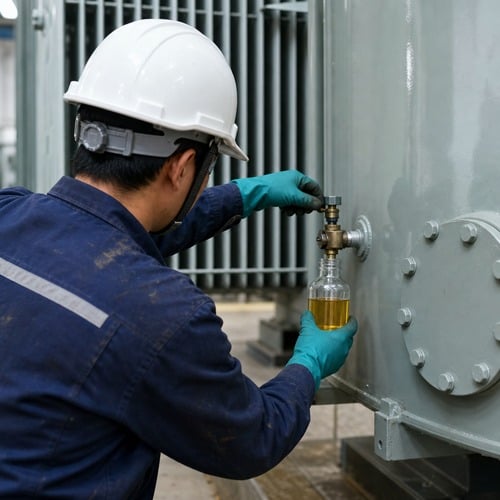
Retrofill buyers get a different benefit. Filling an existing mineral-oil unit with a natural ester has been shown in Cargill's field data to extend remaining paper life by up to eight times, because the ester starts drying the paper from the inside. But retrofill is not "pour and stop". The dissolved gas analysis program must switch from the mineral-oil guide IEEE C57.104 to the ester-specific IEEE C57.155, because gas generation rates differ — a lab using mineral-oil thresholds on an ester unit will send you false alarms. We run the ester baseline DGA as part of factory acceptance testing on request, so maintenance starts from a known fingerprint instead of a guess.
Spills, Environmental Rules, and Retrofilling Reality
Back to that California engineer and his wetland. A mineral-oil spill is a reportable event: soil remediation, waterway protection, and paperwork that follows the asset for years. A natural ester spill is a different category of problem. FR3 is more than 99 percent bio-based per ASTM D6866, non-hazardous under GHS, and 100 percent biodegradable in as little as ten days under OPPTS 835.3100. For a substation near a watershed, that difference can decide whether the permit board approves the site at all — and it shrinks the containment budget on every unit.
Retrofitting an aging fleet is the fastest way to capture ester benefits without buying new iron, and utilities are doing exactly that on units with sound tanks. The catch list is real: nitrile (Buna-N) gaskets degrade in ester and should be swapped for Viton or EPDM; pumps and radiators need a review because ester is more viscous than mineral oil and the cooling performance shifts; the nameplate must be changed to the new fluid; and the DGA baseline resets. A competent factory will give you a conversion study before you commit — we do, because a retrofill done wrong voids the asset's thermal history.
Where Ester-Filled Units Earn Their Premium First
Not every project needs ester. It earns its premium where the consequences of fire or leak are highest: battery energy storage sites, where a transformer sits meters from lithium cells; data centers, where downtime cost dwarfs equipment cost; solar farms, including floating PV over water where a leak goes straight into the reservoir; urban substations squeezed against occupied buildings; and utilities operating near rivers, wetlands, or protected coastline. If your site has any of those characteristics, the fluid premium is small compared with the risk it removes.
At Ryan Electric we build liquid-filled power and distribution transformers from 10 kV up to 200 MVA, plus pad-mounted units for North American projects. Mineral oil remains our standard fill, and natural ester is an option on any unit where the spec requires it. Because we are an Eaton joint venture partner, ester-specified projects are not new territory for our engineers — the FR3 lineage runs through Eaton's Envirotran family, and we quote against the same acceptance criteria. When we build an ester unit, the temperature-rise test is run with the actual ester fill, and the fluid test report ships with the test documents, not after three emails.
Five Questions to Put in Your RFQ
If you are buying a liquid-filled transformer for a fire-sensitive or environmentally sensitive site, add these five lines to your RFQ:
- Fluid and price basis. Is the quote mineral oil or natural ester, and what does the delta include — fluid, processing, testing?
- Fire point evidence. Send the ASTM D92 fire-point report, state the code basis (NEC 450.23), and confirm whether FM and UL/cUL listings are available for your rating.
- Design for the fluid. Confirm the temperature-rise test was performed with the ester fill, not converted from a mineral-oil test.
- DGA program. Which guide will maintenance use — IEEE C57.104 for mineral oil or IEEE C57.155 for ester — and is an ester baseline DGA included at FAT?
- Retrofill scope. If converting an existing unit: gasket material, conservator and pump review, nameplate update, and DGA baseline reset.
Buyers who skip these lines get a mineral-oil quote with an ester sticker. Buyers who ask them get a unit that was designed, tested, and documented for the ester transformer fluid on the nameplate.
If your next project touches a wetland, a city block, a storage container, or a data center campus, the fluid line deserves ten minutes of your spec review. Send us your rating, site conditions, and the applicable code through ryantransformers.com — we will come back with a fluid recommendation, the fire-point and certification picture, and a realistic delivery schedule, not a generic quote.
About the Author — This guide was written by the engineering team at Ryan Electric, an Eaton joint venture partner and UL/CSA-certified transformer manufacturer in Jiangsu, China, serving utilities, data centers, storage developers, and industrial clients across North America, Southeast Asia, the Middle East, and Africa.
Table of Contents
- Why the Fluid Question Is No Longer a Footnote
- Ester Transformer Fluid vs Mineral Oil: The Core Differences
- Fire Safety: What the Codes Actually Reward
- Paper, Moisture, and the Aging Math
- Spills, Environmental Rules, and Retrofilling Reality
- Where Ester-Filled Units Earn Their Premium First
- Five Questions to Put in Your RFQ