
 EN
EN
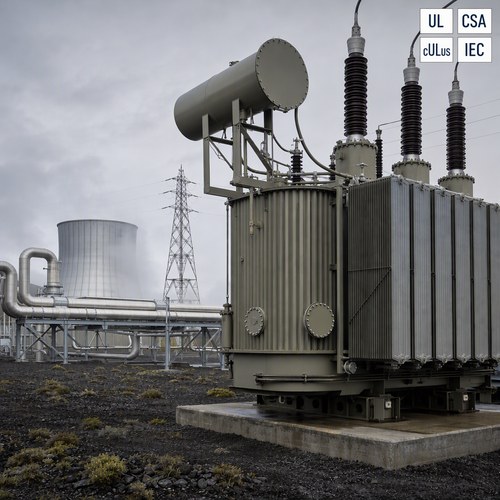
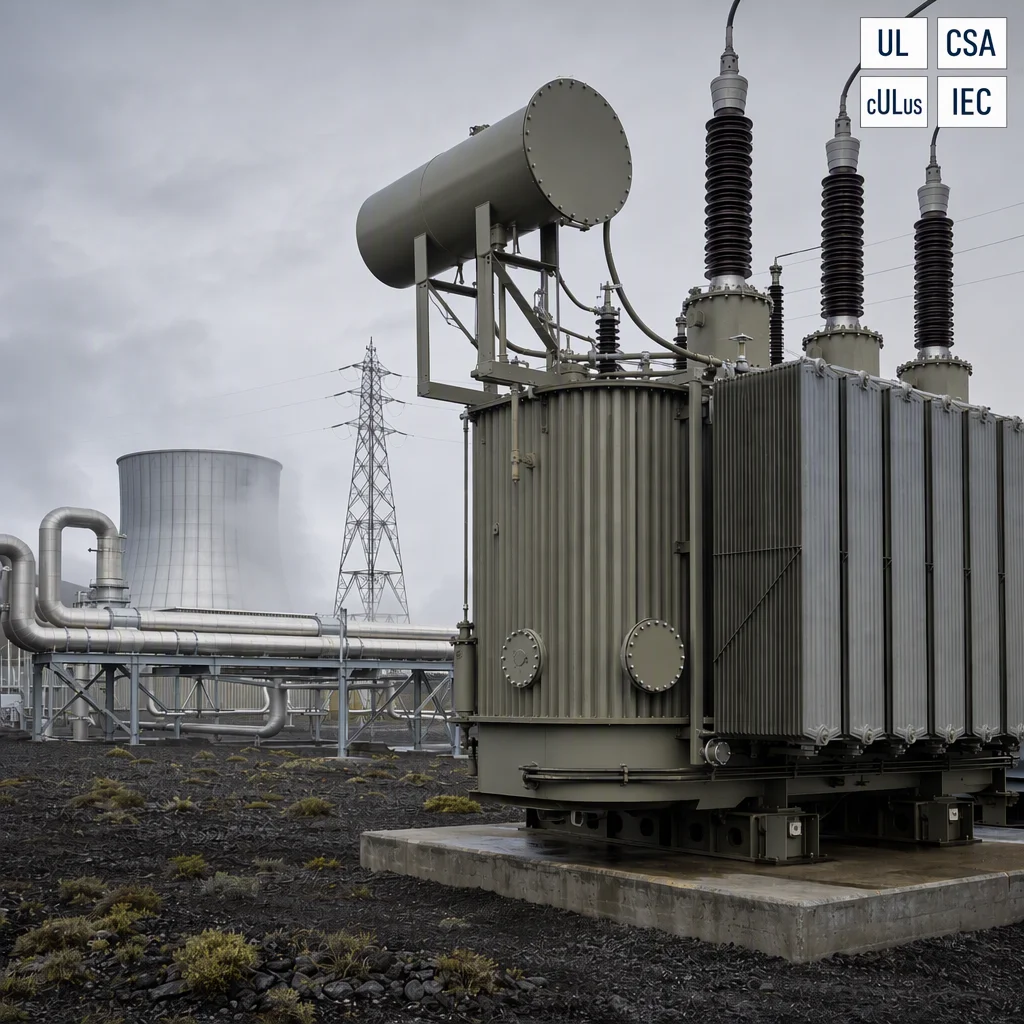
A geothermal operator in the Rift Valley sent us a 12 MVA step-up unit back for inspection after eighteen months in service. Nothing had failed electrically. What had failed was the paint: the tank coating was blistered to bare steel along the radiator bank, the copper bushing studs had gone green-black, and the silica gel in the breather had turned dark within weeks of commissioning. The culprit was hydrogen sulfide, the same gas that makes a geothermal field worth drilling attacks everything bolted to it.
The unit was correctly rated. It was not correctly specified. That difference decides whether a geothermal power plant transformer gives you twenty-five years of baseload service or gets pulled at the first major outage.
Why Geothermal Is a Harder Duty Than Solar or Wind
The U.S. Department of Energy describes geothermal as baseload power with a capacity factor of roughly 90%, meaning a geothermal plant runs at maximum output almost continuously while balancing intermittent resources such as wind and solar. That single number reshapes the transformer duty. You can read the full description on the DOE Office of Geothermal site.
A transformer does not age because of peak load. It ages because of time at temperature. A unit on a solar farm gets a hard workout in the afternoon and a long, cool night to recover. A geothermal unit never gets that recovery period. It sits near rated load through the night, through weekends, through the plant's entire operating life.
The table below shows why the same kVA rating means three different specifications:
| Plant type | Capacity factor | Transformer load pattern | Dominant stress |
| Solar PV | 20% - 25% | Daily ramp, idle overnight | Thermal cycling, harmonics from inverters |
| Wind | 30% - 45% | Intermittent, highly variable | Cycling, load-generated harmonics |
| Geothermal | about 90% | Near rated load, 24/7 | Sustained winding hot spot, H2S corrosion, remote site access |
H2S: The Failure Mode That Rarely Makes the Spec Sheet
Hydrogen sulfide appears in geothermal steam and brine at concentrations from a few parts per million to several hundred. It is not a fire risk at those levels, which is exactly why it gets ignored in procurement. What it is, is a metal thief. H2S corrosion attacks copper and silver preferentially, building sulfide films that increase contact resistance on every bolted and plated joint in the current path.
In practice, that means bushing studs, tap changer contacts, control wiring terminations and any silver-plated connection inside the terminal box. We have opened geothermal units where the winding insulation tested perfectly and the tap changer contacts were the reason the unit had to come out of service. The fix is material selection: avoid silver plating entirely on geothermal orders, substitute tinned copper or nickel-plated contact surfaces, and seal the control cabinet with a gasket rather than a louvered vent.
The oil preservation system matters just as much. A free-breathing conservator pulls H2S-laden air into the oil every day as the tank head space contracts. For geothermal duty we specify a sealed breather with an air dryer, or a fully hermetically sealed oil immersed transformer design where the rating allows it. That single decision protects the oil, the insulation and the tap changer contacts at the same time.
Sizing a Geothermal Power Plant Transformer for 90% Capacity Factor
Run the arithmetic before you pick a rating. At a 90% capacity factor, a geothermal unit accumulates roughly 7,880 loaded hours a year. A solar plant at 25% accumulates about 2,190. The geothermal transformer therefore spends around three and a half times as many hours at temperature every single year, and thermal ageing is cumulative.
That is the reason we quote a 55 K winding temperature rise for geothermal duty instead of the 65 K default that most distribution specifications carry. A lower design rise buys a lower hot spot, and a lower hot spot buys insulation life. The trade is real: expect a larger core, more radiator area and a heavier tank for the same kVA.
Generator step-up transformers on flash and binary plants typically take generator voltage in the 4.16 kV to 13.8 kV range up to a 34.5 kV collector or a 69 kV to 138 kV transmission connection. Size the unit on generator MVA plus the plant's parasitic load - cooling towers, circulating water pumps, vacuum systems and gas extraction - and then confirm the rating against the load profile rather than a single nameplate number. If the plant expects to run above nameplate during steam-rich periods, ask for the overload capability to be documented against the IEEE C57.91 loading guide rather than assumed.
Cooling, Coating and the Paint System Specification
Geothermal sites are frequently coastal or volcanic, so two corrosion drivers stack: hydrogen sulfide from the process side and chloride-laden air from the marine side. The coating system is a specification item, not a finishing detail. Name the corrosivity category in the RFQ and hold the supplier to it. The ISO 12944-2 classification of environments defines the C1 to CX categories and is the common language buyers and manufacturers can both work from; C5-M is the category that covers coastal and marine exposure.
For a coastal geothermal order we quote an epoxy primer, epoxy intermediate and polyurethane topcoat system with a total dry film thickness in the region of 320 micrometres, applied over a hot-dip galvanized or blast-cleaned substrate. Radiator fins get separate treatment: in a geothermal plant the fins collect both dust and sulfide, and a thin fin coating that is fine inland can be gone in two seasons. Specify fin corrosion protection explicitly.
Cooling itself also needs a second look. A unit running near rated load 24/7 with a 40 to 50 C ambient has no margin to lose. Verify the calculated winding hot spot at the site ambient rather than at 30 C, and confirm fan-assisted cooling stages are specified with independent power supplies so a control circuit fault does not cost you the second cooling stage.
Altitude, Seismic Zones and Getting the Unit to the Site
Many of the world's geothermal fields sit above 1,000 metres: Kenya's Olkaria complex, parts of Indonesia, and much of the East African Rift. Insulation withstand and cooling performance both fall with altitude, so a unit specified at sea level is not the same unit at 2,000 metres. Derating factors must be applied to the insulation level and the cooling calculation, and the calculation should be shown in the test report rather than stated as a claim.
Seismic design is the second geographic constraint. Rift Valley, Icelandic, Indonesian and Californian fields all sit in active seismic zones, and the transformer is the heaviest item in the substation. That means anchorage design, base plate strength and, on utility projects, seismic qualification against IEEE 693. A generic welded skid is not a seismic design.
Then there is logistics, which surprises buyers more often than any electrical parameter. Geothermal fields are usually reached by long, poorly surfaced access roads with tight weight limits per axle. Shipping a fully assembled 40-tonne unit to a remote field can be impossible. The practical answer is a design that travels in pieces: tank shipped with oil removed, radiators crated separately, bushings in dedicated cases, and a documented site assembly sequence with torque values. Our oil immersed transformer range is routinely supplied in this configuration for remote generation projects.
How Ryan Electric Prepares a Unit for Geothermal Duty
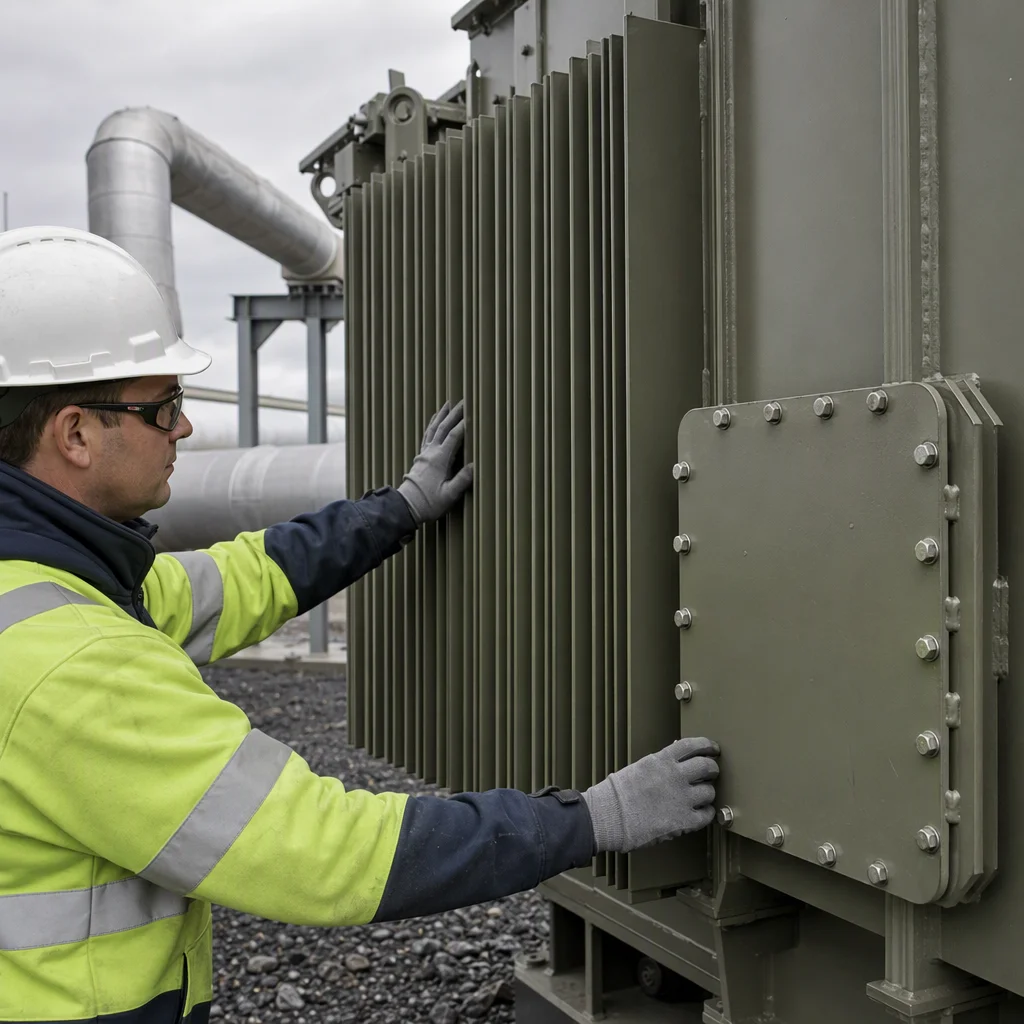
Every geothermal order runs through a different specification checklist than a standard distribution unit. Material substitutions are recorded on the bill of materials so the buyer can audit them: no silver-plated contacts, sealed oil preservation, C5-M coating, verified altitude derating, documented seismic anchorage. The routine test report then carries the cold resistance and ratio data needed for commissioning, measured against the actual tap positions supplied.
We build in a 120,000 square metre facility with more than 180 sets of production and test equipment and 37 patents, and we hold UL, CSA, IEEE, DEKRA, CNAS and CE certification coverage. Since 2023 Ryan Electric has operated as an official joint venture partner of Eaton, and that relationship tightened the documentation standard we work to. The units we send to high-corrosion, high-altitude and remote sites are the same platform we build for data centre, utility and mining customers, specified for the conditions the site actually presents.
What to Put in a Geothermal Transformer RFQ
Most geothermal RFQs we receive list voltage, rating and impedance, and stop there. Those three items do not describe a geothermal duty. Add these seven inputs and the quote you get back will be comparable across suppliers:
H2S concentration. Measured ppm in steam or brine, plus whether the site is coastal.
Site ambient and altitude. Design maximum ambient in C and elevation above sea level.
Corrosivity category and coating system. ISO 12944-2 category plus required dry film thickness.
Load profile and capacity factor. Expected annual loaded hours, not just nameplate kVA.
Winding temperature rise and hot spot limit. State the rise you want, or ask the supplier to justify the default.
Seismic requirement. Whether IEEE 693 qualification is required or site-specific anchorage criteria apply.
Transport limits. Maximum piece weight, road constraints, and whether site assembly is expected.
Before You Specify the Next Geothermal Unit
Send us the field data - H2S concentration, ambient, altitude, seismic zone and load profile - and our engineering team will come back with a specification sheet that shows the material substitutions, the cooling calculation and the transport plan. We would rather argue about the paint system on paper than replace a radiator bank in the field.
About the Author: This article was written by the engineering team at Ryan Electric (Jiangsu Ryan Transformers), a manufacturer of cast resin, oil-immersed and pad-mounted transformers serving utility, data centre, renewable generation and industrial customers since 2007. The team works daily with IEEE C57 and IEC 60076 requirements and supports developers and EPC contractors through specification, factory testing and site commissioning.
Table of Contents
- Why Geothermal Is a Harder Duty Than Solar or Wind
- H2S: The Failure Mode That Rarely Makes the Spec Sheet
- Sizing a Geothermal Power Plant Transformer for 90% Capacity Factor
- Cooling, Coating and the Paint System Specification
- Altitude, Seismic Zones and Getting the Unit to the Site
- How Ryan Electric Prepares a Unit for Geothermal Duty
- What to Put in a Geothermal Transformer RFQ
- Before You Specify the Next Geothermal Unit