
 EN
EN
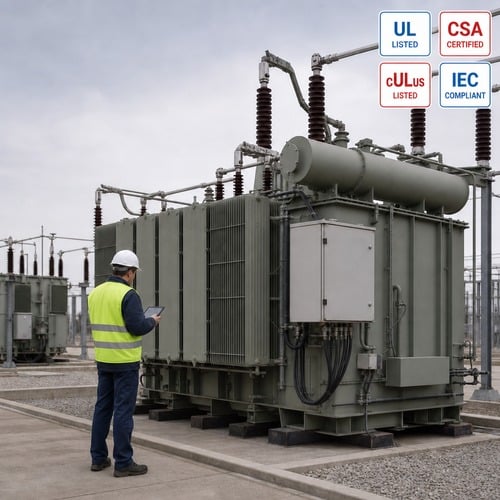
Last fall, a utility in the U.S. Midwest called us about a 15 MVA transformer that tripped on differential protection at 3 a.m. Their most recent oil sample, drawn six months earlier, had come back clean on every dissolved gas. We opened the tank and found a low-energy winding fault that had been developing for weeks — invisible to a sampling schedule that ran twice a year. That phone call changed how we open every reliability conversation: with transformer condition monitoring, not with the price list.
What Transformer Condition Monitoring Actually Covers
Condition monitoring sounds like a single product, but it is a layered strategy. At the base sit the instruments every unit already carries: oil temperature gauges, winding temperature indicators, Buchholz relays, and pressure relief devices. One layer up, operators add periodic dissolved gas analysis (DGA) through a laboratory. At the top, transformer online monitoring systems stream data continuously from sensors on the tank, bushing, and cooler — gas-in-oil, winding temperature, partial discharge, tap changer activity — straight into the control room.
Which layer you need depends on one question: what does it cost if this transformer fails without warning? A 500 kVA pad-mount on a lightly loaded feeder may never justify online hardware. A 30 MVA unit feeding a data center campus or a refinery is a different calculation entirely. We tell buyers to design the monitoring scheme before the transformer is ordered, because retrofitting sensors later means a second outage window, a second crane, and oil handling you could have avoided.
The Four Signals That Predict Most Unplanned Outages
In nearly two decades of building and troubleshooting transformers, we have watched most premature failures announce themselves through four measurable signals. Learn to read these four and you will catch problems months earlier than the industry average.
Dissolved Gas Analysis Trends
Faults inside an oil-immersed transformer decompose the oil and paper insulation into characteristic gases: hydrogen, methane, ethylene, and — the one that gets our attention — acetylene, which appears when an arc or a severe hot spot is present. A single sample tells you little; the trend tells you everything. The IEEE C57.104 guide, which our test engineers apply to every DGA report we issue, defines condition levels and stresses gas generation rates over single readings. When ethylene climbs steadily across three samples, that transformer is talking — and one snapshot cannot hear it.
Winding Temperature and Thermal Aging
Insulation life follows a well-documented aging curve. Under the IEC 60076-7 loading guide, each 6°C reduction in hot-spot temperature roughly halves the relative thermal aging rate; each 6°C rise doubles it. A unit that runs with a hot spot of 110°C instead of the design 98°C at rated load is aging about four times faster — silently, because no alarm sounds until the paper has already degraded. Continuous winding temperature monitoring with an alarm threshold is the cheapest form of predictive maintenance for transformers that operate near nameplate.
Partial Discharge
Partial discharge (PD) is the early voice of insulation defects in both oil-immersed and dry-type units. We routinely measure PD below 10 pC on cast resin transformers in our factory test hall before shipment. In service, online PD sensors catch the moment discharge activity starts to grow — often years before a dielectric failure. The challenge is that PD monitoring demands experience to interpret: background noise, switching transients, and corona all mask real signals, which is why we never ship a monitoring recommendation without commissioning support.
Mechanical Wear and Tap Changer Activity
The most failure-prone subsystem on a power transformer is usually the on-load tap changer, not the windings. Drive motor current, tap position feedback, and oil temperature around the diverter switch all trend toward trouble before a mechanism jams. Simple counters and position loggers, feeding the same SCADA screen as your electrical readings, turn an invisible wear process into a scheduled maintenance event.
Online Monitoring vs. Periodic Oil Sampling: Choose by Risk
| Comparison | Periodic Oil Sampling | Transformer Online Monitoring |
| Data frequency | Snapshot every 6-12 months | Continuous or hourly |
| Catching sudden faults | Nearly impossible | Alarm within minutes |
| Typical cost | Per-sample lab fees | Sensors + gateway + annual service |
| Best fit | Low-risk distribution, tight budget | Critical substations, data centers, process plants |
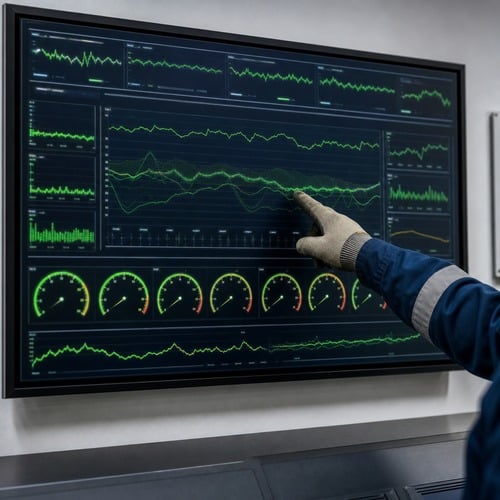
Periodic sampling is not obsolete — it remains the backbone of utility practice, and the IEEE C57.104 framework is built around it. The real issue is that sampling gaps are exactly when faults like the one in our opening story choose to develop. A hybrid approach works best for most owners: keep the laboratory DGA program, add online gas or temperature monitoring to the units whose failure would hurt most, and review everything on one dashboard. Done this way, transformer condition monitoring becomes a practical predictive maintenance for transformers on a utility budget, not a luxury line item. If you want to go deeper on the thermal side of this decision, read our earlier guide to transformer temperature rise — hot-spot behavior is the physics behind every alarm threshold you set.
What Monitoring Costs vs. What an Outage Costs
Let us put numbers on the decision. An unplanned failure of a substation transformer means the purchase price of a replacement unit, plus site work, plus lost production or lost revenue during replacement lead time — and in today's market, lead times for large power transformers stretch far beyond what buyers expect. Against that, a monitoring package for a single transformer typically costs a small fraction of the unit price, and the annual service fee is an operating expense, not a capital shock.
We have also seen the opposite mistake: a client who bought top-tier monitoring for every small distribution transformer and then had no budget left for the critical one. That is why we push a risk-ranked plan — this is where transformer condition monitoring behaves like insurance with a measurable premium. Start with the transformers that serve revenue-critical loads or that already show signs of age, add the second tier when the first is proven, and let the data justify each next step. Budget is a real constraint — spend it where an unplanned outage actually hurts. Before you spec, also check what impedance does to fault duty in your network in our transformer percent impedance guide.
What We Build into Transformers at Ryan
Since 2023, Ryan Electric has operated as an official joint-venture partner of Eaton, and that relationship shapes how we build monitoring-ready units. Our standard practice is to pre-install the interfaces a monitoring plan needs: DGA sampling valves with proper placement for online analyzers, spare winding temperature probe wells beyond the two the nameplate requires, a Buchholz relay flange, and a marshalling box pre-wired with spare cores for future sensors. When a customer specifies a monitoring package, we validate the full chain — sensor, cable, gateway — during factory acceptance testing, not after the unit lands on site.
Every unit we ship is type-tested and routine-tested against UL, CSA, cULus, or IEC requirements depending on destination, and our 120,000 m² factory in China runs 180+ sets of production equipment. The same engineers who sign the test reports write the commissioning notes for your monitoring system, so the data you see in year one is the data we verified in the test bay. When you request a quote, ask for the monitoring-ready option sheet — it lists the standard sensor interfaces, spare probe wells, and marshalling box cores included on every unit.
Know What Your Transformer Is Telling You — Before It Fails Loudly
The 15 MVA unit in our opening story is running again today, with an online gas monitor watching the tank that almost failed it. The operator's first question after the rebuild was not about the repair bill — it was "what should we have installed the first time?" If you are specifying a transformer for a substation, data center, solar farm, or industrial plant, ask for monitoring-ready options before you place the order. Send your load profile, voltage class, and site conditions through ryantransformers.com — our engineers will tell you which monitoring layer earns its keep for your exact application.
About the Author: This article was written by the transformer engineering team at Ryan Electric (Jiangsu Ryan Electric Co., Ltd.), a manufacturer of oil-immersed, dry-type, and pad-mounted transformers since 2007. The team supports utilities, EPC contractors, and industrial buyers across North America, Southeast Asia, the Middle East, and Africa with UL/CSA/cULus/IEC certified equipment and application engineering.
Table of Contents
- What Transformer Condition Monitoring Actually Covers
- The Four Signals That Predict Most Unplanned Outages
- Online Monitoring vs. Periodic Oil Sampling: Choose by Risk
- What Monitoring Costs vs. What an Outage Costs
- What We Build into Transformers at Ryan
- Know What Your Transformer Is Telling You — Before It Fails Loudly